
Check Received Tote Handles and Seams Against the Approved Bag
Locate each handle root and visible seam on an identified tote, compare the relaxed bag with its approved reference, and separate affected bags from overlapping findings.
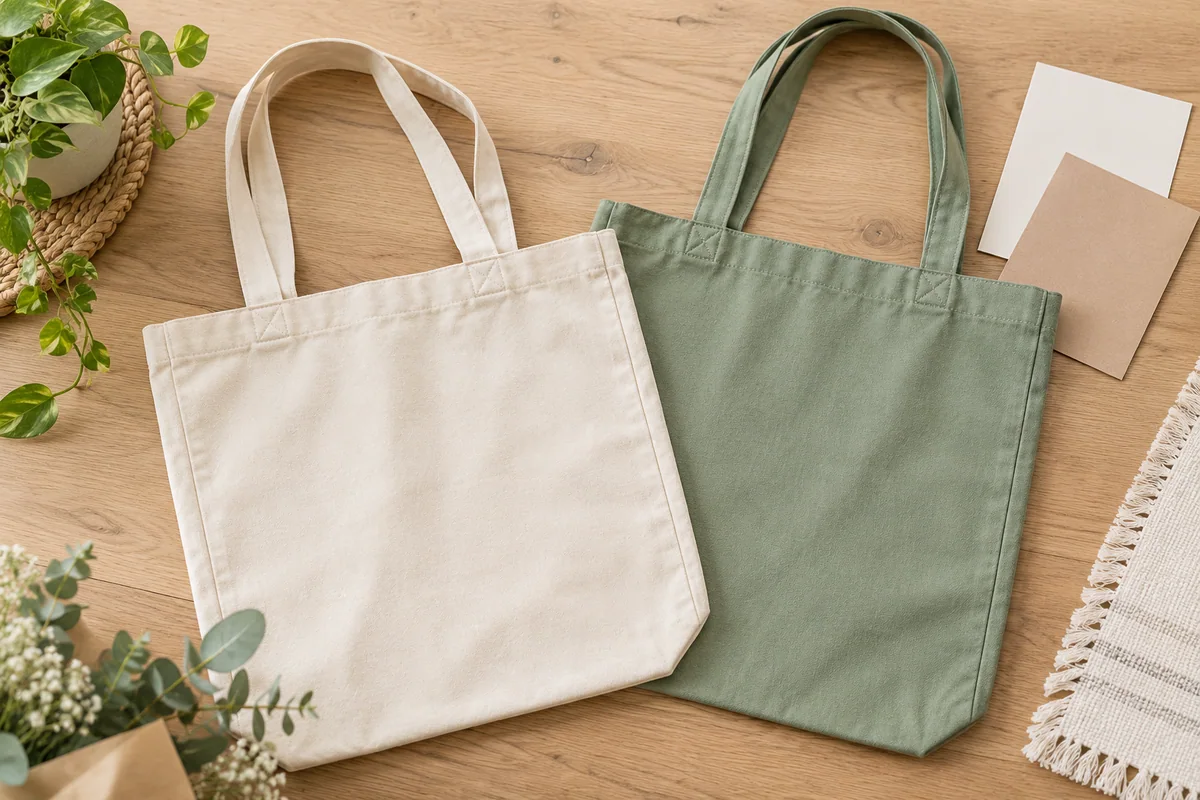
A received custom tote can resemble the approved bag from a distance while its two handle attachments sit differently or a visible seam has an opening. The receiving decision is whether those identified construction details meet the agreed workmanship criteria. A clear logo does not answer that question, and several photographs of one bag do not establish several affected bags.
Use a handle-pair and seam-location map. It connects the front and back of each checked tote to the retained sewn reference, then keeps the observed departure separate from the buyer’s decision. This is an observation method for an already approved order, including totes sourced through 1688. It does not establish carrying capacity, hidden construction or a whole-delivery quality result.
Give the four handle roots stable names
Start with the approved finished bag and the written criteria that accompany it. Record the model, size, construction, sample reference and approval revision. A loose fabric swatch cannot stand in for the sewn reference. If the physical sample and written attachment detail disagree, identify that conflict before deciding which received bags conform.
Set one viewing convention for the record: top opening upward, designated front facing the viewer, left and right defined from that view. Name the front roots F-L and F-R. When the back faces the viewer, name its roots B-L and B-R using the same stated viewer-based convention. A back-left root is therefore a record location, not an instruction to assume it is directly behind front-left.
Give each bag its own receiving ID. Use the whole-bag view to show which two roots belong to one handle, and which face carries each handle. This avoids treating the two visible handles as an interchangeable pair. If a pocket or label establishes front, show that feature in the overview. Preserve the identity link when taking closer views.
Compare the bag in its recorded resting state
Where permitted by the product and receiving instructions, lay the tote empty and relaxed on a suitable surface. Record any fold, lining or packaging that prevents a comparison. Do not pull the handles level, stretch a panel, load the bag or suspend it to create an apparent strength check. Stop handling if damage or resistance makes it inappropriate.
Compare the corresponding roots on the received bag and approved reference in the same orientation. Describe an attachment that appears higher, lower or differently angled using its location. “F-R starts nearer the top edge than F-L” is more useful than “handles bad.” If dimensions are required, use the separately agreed measurement procedure; perspective in a photograph is not a millimetre result.
Follow the visible seam route specified for the order. Identify the side, base, top hem or handle-root seam, and distinguish an exposed thread end from a visible interruption in the joining line. Do not unpick, trim or tug a thread to find out what happens. A hidden seam section stays unobserved even when nearby stitching looks continuous.
Build a handle and seam map for each checked tote
Use one row per location and finding, with a bag-level summary above it. The summary names the bag, approved reference, views completed and views unavailable. The following entries are blank-record prompts, not actual inspection results.
| Location record | Comparison to retain | Observation wording | Evidence link | Bag tally treatment |
|---|---|---|---|---|
| Front handle F-L to F-R | Same face of approved sewn sample | Relative root position and visible attachment outline | Whole front plus relevant root details | One bag even if both roots have findings |
| Back handle B-L to B-R | Same back view and resting state | Relative position, orientation and any obscured root | Whole back plus details | Reuse the existing bag ID |
| Front and back pairing | Which roots form each handle | Apparent difference between identified handles | Both face references | Another finding, not another bag |
| Side or base seam | Named seam segment on reference | Visible opening or interruption at a located segment | Seam context plus close view | Add bag only if not already affected |
| Inaccessible construction | Agreed area that could not be seen | Lining, fold or other access limit | Available context | Unchecked, not a matching result |
A separate finding ID lets the receiver link two observations on one tote without losing either. Keep the reference comparison beside the finding. A close-up can show an opening while leaving the buyer unable to locate it; a whole-bag view can establish location while concealing detail. Use whichever paired views answer the particular row.
A fictional twelve-bag comparison
Suppose an agreed receiving check covers bags T-01 through T-12. In this entirely fictional example, T-04 and T-09 each show unequal front-handle attachment positions relative to the approved reference. T-09 also has a visible opening in its right side seam. The other ten checked bags have no recorded departure in the visible areas examined.
The map contains three findings: one on T-04 and two on T-09. The unique affected set is {T-04, T-09}, so the affected-unit count is two. Adding the three finding rows and calling them three defective bags would overstate the count. Calling the other ten fully sound would overstate the scope.
Retain the summary as “12 identified bags examined for the agreed visible construction; two bags with three observations.” If the wider delivery contains additional bags, their condition remains unchecked by this record. The example supplies no rejection threshold. NIST distinguishes lot acceptance decisions under sampling plans from estimates of lot quality; an invented twelve-bag exercise is not such a plan. NIST acceptance-sampling explanation
Decide the affected locations without guessing the cause
The buyer’s reviewer should apply the existing criteria to each located observation. Where the criterion is missing or the view inconclusive, leave that row unresolved. Do not insert an allowed handle offset after receipt simply because the difference looks small. Keep a seller’s explanation, such as a claim about folding, as its response until the relevant comparison resolves it.
For T-09, a decision about handle appearance would not close the side-seam finding. If correction is agreed, the return record must identify the same bag or its documented replacement, the locations addressed and the new evidence. Preserve the original observation. A photograph of a different tote cannot demonstrate correction of T-09.
Visible stitching alone does not verify thread composition, concealed seam allowance, strength, wash performance, safety or compliance. The tote sourcing guide provides broader product context; this map remains limited to the construction actually observed.
Ask for the observation scope before commissioning work
Through the gift quote form, describe the approved tote, the handle-root and seam locations to compare, the identified receiving group and required views. Ask the provider to confirm availability, safe handling scope, fees and reporting dates. Submit links, a description or an image preview; arrange original or sensitive files separately.
Carry the open locations into the agreed custom-gift progress record: evidence reference, responsible person, exception and next buyer decision. Agree the reporting medium and frequency. The meaningful milestone is the authorized decision on the mapped bags, rather than an automatic status change when more photographs arrive.
Frequently asked questions
Can a handle look uneven because the tote is folded?
A fold or an inconsistent resting position can make comparison unclear. Record that condition and request a comparable permitted view of the same bag and approved reference. Do not pull the handles into alignment or decide that folding caused the difference merely because the seller suggests it.
Should one open seam reject the entire delivery?
Apply the order’s actual decision rules and inspection plan. This article gives neither an acceptance count nor a whole-lot rejection rule. Identify the bag and seam, retain the observation and obtain the authorized disposition; any decision about unchecked bags needs its own agreed basis.
What if the lining hides a handle attachment?
Mark the concealed part as unobserved and show the access limitation. Do not cut, unpick or remove the lining. Ask whether the existing approval and service scope require other evidence, and who will decide if that evidence is unavailable.
Does a corrected handle photograph close every finding on that bag?
No. Match the new evidence to the bag and the exact handle location, then review each remaining finding separately. A side-seam opening, an inaccessible root or an unresolved criterion stays open until its own evidence and authorized decision are recorded.
Sources
Discuss a sourcing request related to this article.Check Received Tote Handles and Seams Against the Approved Bag