
Quote Personalised Gifts Using Long and Short Name Proofs
Use synthetic name proofs to agree what happens when a personalised gift runs out of space, loses a character or needs a different layout before real recipient data is handed over.
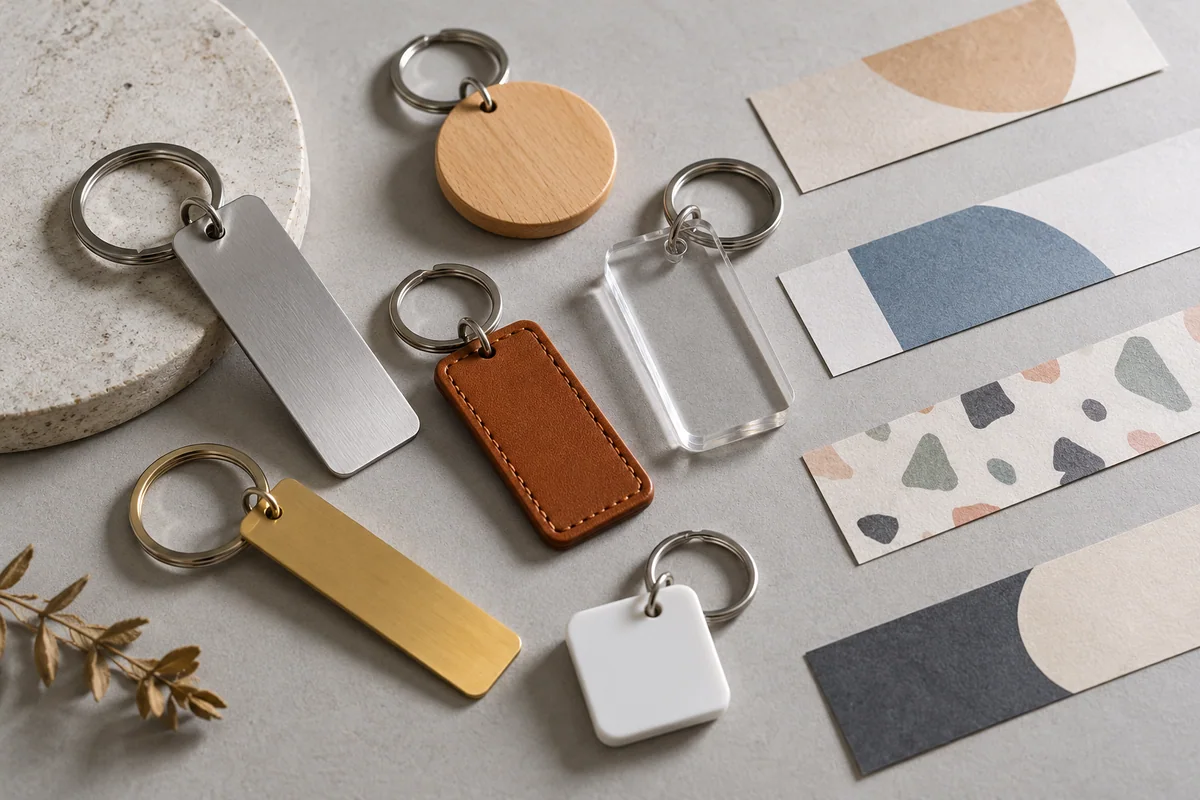
Before ordering individually named gifts, ask the supplier to prove the proposed layout with deliberately varied, fictional strings. Include a short name, a longer name, punctuation, accents and every writing system the buyer expects to use. Agree what happens when one of those examples fails before sending a real recipient list.
The decision is whether the quoted process can preserve approved names legibly on the actual gift. “Personalisation available” leaves the most consequential choices unanswered: who changes a layout, whether text is shortened, how missing characters are reported and which exceptions stop production.
Define the exact text that belongs on the gift
Specify the display field as the buyer wants it to appear. It might be a chosen name, a full display name or a buyer-approved name plus a separate event line. Do not ask the supplier to infer that choice from a contact database with several name columns. Define capitalization, punctuation, line order and whether a blank field means leave the area blank or hold the item.
Names vary in length, order and written form. The W3C’s guidance on personal names describes why systems should avoid narrow assumptions about how names are structured. For a gift project, the practical response is to preserve the buyer-approved display string rather than automatically reorder its parts or remove unfamiliar characters.
Then identify the exact product, surface, decoration zone and proposed method. Ask the supplier to confirm whether individual-name production is available for that configuration, including preparation, proofing and quantity scope. A general custom-logo offer does not establish a variable-name workflow.
Construct a small proof set that exposes different problems
Use fictional strings at the RFQ stage. They should represent the challenges you expect without disclosing recipients’ names. Label each example with a test ID and state that it is synthetic. Ask for its final-size proof on the same product outline, with the proposed font, placement and line treatment identified.
| Synthetic proof ID | Deliberate feature | Supplier must return | Buyer decision if it fails |
|---|---|---|---|
| N-01: Nia | Short string | Position and final rendered size | Keep the agreed alignment or propose a named alternative |
| N-02: Mara Vale | Space between name elements | Spacing and complete visible string | Resolve spacing without changing the approved words |
| N-03: Alexandra Vale-Morren | Long string and hyphen | Measured rendered width and any overflow | Hold for an approved line break, size change or different gift |
| N-04: Élia O’Vale | Accent and apostrophe | Enlarged detail plus final-size proof | Flag missing or altered characters for correction |
| N-05: buyer-created script sample | Required writing system | Exact buyer-supplied characters in the proposed font | Obtain the appointed reader’s approval and supplier feasibility reply |
| N-06: intentional empty value | Blank personalisation field | Stated handling rule | Leave blank only when the buyer has authorized that outcome |
All displayed example names are invented. The table is a starting set, not coverage of every possible name. Add examples that reflect the actual project’s expected punctuation, script combinations or long wording. Ask the supplier which unrepresented cases could still require individual review.
Do not rely solely on character count. Ask for the rendered dimensions of the exact string in the selected layout. A supplier’s maximum-character statement needs its font, case, size and line assumptions before it can be compared with your requirements.
Set an exception ladder the supplier can follow
Choose what remains fixed. The buyer might prioritize a single type size, a fixed one-line layout or preservation of the full approved name. Those preferences can conflict for a particular surface. List the order in which the supplier may propose alternatives, and reserve acceptance for the named buyer owner.
A workable request could say: preserve the full string; flag any overflow; offer a two-line proof if permitted; otherwise return the row for buyer decision. If reducing size is an allowed proposal, require the changed size and a new final-size proof. No supplier should infer permission to abbreviate a name from the existence of a deadline.
Handle missing characters separately from space. Require the supplier to identify the affected string and proposed correction or font alternative. Have a person able to read that text approve the actual rendering. A visually balanced substitute, dropped accent or replacement square does not answer the identity question.
The souvenir sourcing guide covers approved text versions more broadly. This RFQ adds the specific overflow and exception behavior needed when many gifts carry different names.
Hypothetical example: a long name exceeds the agreed zone
Assume a fictional keyring project has a supplier-proposed name zone 36 mm wide. At the proposed layout size, three synthetic proofs render at 18 mm, 29 mm and 46 mm. These invented measurements are not universal font limits or evidence of an available marking process.
The first two fit the proposed width. The third exceeds it by 46 − 36 = 10 mm. Shrinking that third layout to the width alone would imply a scale of 36 ÷ 46, approximately 78.3%, or a 21.7% reduction. That arithmetic describes a digital size change; it does not establish that the resulting mark will be readable on the gift.
Supplier A returns all three at the smaller size without identifying the change. Supplier B flags the third example and proposes a two-line proof while leaving the others unchanged. The buyer now has an explicit visual choice: accept a separately reviewed two-line format, approve a new smaller-size sample if feasible, or choose another product with a different name area.
If the buyer requires one size across the entire set, B’s mixed-layout proposal may still be unsuitable. The point of the comparison is that the trade-off remains visible. Record the selected rule and ask the supplier to reprice any changed preparation or sample scope before production is released.
Separate a sharp file from a feasible physical mark
Adobe’s raster and vector explanation distinguishes pixel-based images from scalable vector geometry. That distinction helps with artwork preparation, but a scalable name file does not prove that the proposed decoration can reproduce it at the chosen physical size.
Request a sample representing the relevant surface, finish and process, with the difficult synthetic examples agreed in advance. Record whether the sample includes the longest string, the smallest proposed rendering and the required character features. A sample showing only the short name leaves the hard case unanswered.
Use the general custom-printing guide for broader artwork and sample gates. Keep font permission, the supplier’s required original-file format and responsibility for producing each proof explicit. Do not assume outlined lettering or a font transfer is included in the quoted service.
Plan the real-data handover after feasibility is resolved
Once a supplier and workflow are selected, agree the authorized recipient-data handover route, access and handling scope with the buyer’s responsible owner. Share only the fields needed for the agreed personalisation task. Avoid embedding the full recipient list in initial screenshots or an open design discussion.
Ask for a stable item reference alongside each approved display string and a way to identify a revised entry without using the name alone. Confirm how the supplier will report exceptions, which list issue controls production and what happens when the buyer changes a name after the agreed cutoff. These arrangements need a specific supplier response; this article assumes no existing data platform or automated proofing service.
For full-chain progress tracking, record the name-fit stage, synthetic-proof evidence, buyer owner, unresolved exceptions and next decision. Later updates should distinguish approved layout rules from approval of the actual production list.
Start through Get a quote with quantity, destination, requested in-hands date and synthetic examples as PNG, JPEG, WebP or GIF previews, or a text description. Arrange original artwork and any authorized recipient-file handover separately after review. Keep the gift specification and name exception rules attached to the quotation you choose.
Frequently asked questions
Should the supplier correct a recipient’s apparent spelling mistake?
Ask it to flag the specific entry to the buyer’s list owner. It should not silently replace the approved string using a dictionary, a familiar name or another row. The buyer can verify the intended display form with the appropriate source and issue a controlled correction. Record whether the change affects an already approved proof, prepared artwork or production scope.
How can I compare quotes when one supplier charges per name?
Ask both suppliers to state the included name count, number of layouts, proofing scope, exception handling and charges for changed entries. A per-name charge and a single preparation fee can cover different work. Compare them against the same synthetic proof set and expected production-list scope, without assuming that automated processing, individual proof approval or rework is included.
Do repeated names need separate production references?
They should remain separately identifiable if they represent separate gifts, variants or recipients. A repeated display string may be intentional and should not be removed as a duplicate without the buyer’s instruction. Agree a simple item reference and quantity basis with the supplier so a correction to one gift does not accidentally change another. Keep unnecessary recipient details outside that production reference.
What happens if a late name falls outside the approved proof set?
Treat it as a new exception. Ask the supplier for a final-size proof under the existing layout rules and for any changed cost or date. If it cannot preserve the approved string within the accepted format, send the decision back to the buyer owner. Earlier approval of shorter examples does not authorize automatic abbreviation, font substitution or unreadable reduction for the late entry.
Sources
- 1688 Gifts existing product and buyer context1688 Gifts
- Custom gift printing: methods, setup fees and sample approval1688 Gifts
- Custom promotional gifts: approval, cost and progress tracking1688 Gifts
- 1688 Gifts quote form: inspected active ProcurementForm1688 Gifts
- Personal names around the worldW3C Internationalization
- Raster vs. vector: What are the differences?Adobe
Discuss a sourcing request related to this article.Quote Personalised Gifts Using Long and Short Name Proofs