
Decide Which Parts of a Personalised Leftover Gift May Be Reused
Separate named gifts from potential generic components, preserve original assignments, and verify the specific new purpose before counting any reuse.
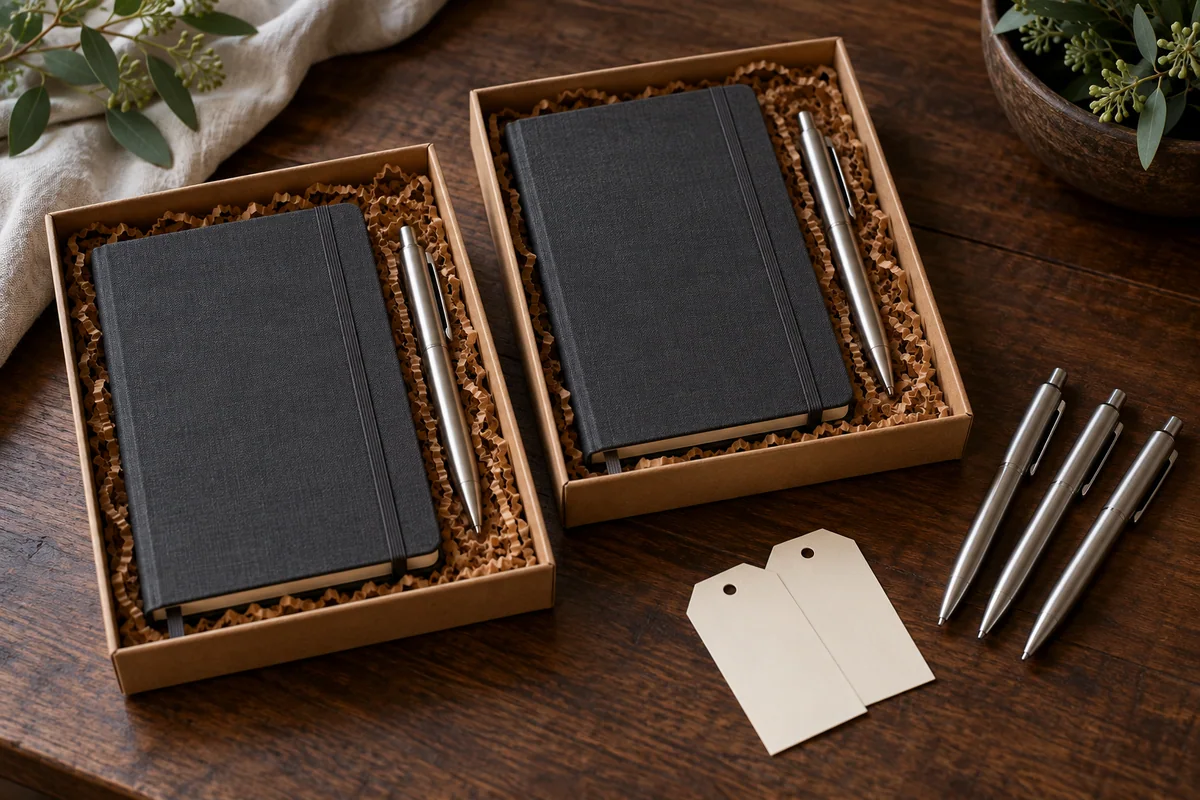
A leftover gift bearing one recipient’s name should keep that assignment visible in the reuse decision. Even when its box contains an unmarked item, the whole set cannot be counted as a gift for someone new merely because it was never handed out. Review the recipient-specific part and any proposed generic reuse separately before changing the next purchasing requirement.
Begin with a specific next gift programme and identified leftover sets. The output is a personalised-set reuse decision by component identity. It asks whether an unmarked component has a separately approved purpose, while preserving the restriction attached to the original named gift. It supplies no instruction to dismantle, rename, redistribute or dispose of anything.
Preserve the original assignment without repeating the name
Use the existing authorised assignment record to identify the set and the recipient-specific item within it. Keep the actual personal-data mapping with its responsible owner. A synthetic example can use keys such as L1 and L2; a real work key may still be linkable to a person and should not be treated as automatically anonymous.
Ask the programme owner what the leftover status actually means. The gift might still await its original recipient, or the original purpose may have changed. An uncollected box does not tell the purchasing coordinator which interpretation applies. If the owner’s decision is missing, retain an unresolved original assignment rather than assuming the recipient has abandoned it.
Record the item carrying the personalisation precisely. A name on the notebook, a recipient-specific card and an outer assignment label are different objects. The review must identify the actual restriction; it should not conclude that every unmarked component is freely available simply because only one surface displays a name.
Ask what a generic component would become
Describe the candidate component by its existing reference and proposed use in the next programme. An unmarked pen might be considered as a standalone giveaway, as a component of another approved gift or as unsuitable for the new brief. Those are buyer decisions with different outputs.
Check whether the next brief actually accepts that output. If it calls for a notebook-and-pen gift, approval of a pen alone cannot satisfy the requirement. Avoid converting “six potential pens” into “six gifts saved” when the required gift has not changed.
Then identify the permission and evidence needed before any proposed separation. Ask the responsible owner whether the original set may be changed and which authorised party could perform the agreed work. Obtain the appropriate condition and presentation decisions for the resulting item. This record consumes those decisions; it does not supply a disassembly method or an inspection checklist.
Work through six fictional leftover sets
Assume six fictional sets each contain one named notebook and one unmarked pen. The sets are identified through synthetic keys L1 to L6. The programme owner has not authorised reassignment in this example, and no separation, condition review or new gift approval has occurred. The grouped rows illustrate different proposed destinations for the same type of pen.
| Original assignment key | Recipient-specific part | Generic part candidate | Authorized separation | New gift approval | Unresolved count |
|---|---|---|---|---|---|
| Fictional L1–L2, two sets | Two notebooks carrying their original assigned names | Two unmarked pens proposed for a standalone giveaway | Not established | Standalone pen proposal awaiting the next programme owner | Two potential pens; no new-recipient gifts approved |
| Fictional L3–L6, four sets | Four notebooks carrying their original assigned names | Four unmarked pens proposed against a notebook-and-pen brief | Not established | A pen alone does not meet the stated proposed brief | Four potential pens; whole-gift requirement unresolved |
The candidate count is two plus four, or six pens. The original population remains six sets containing six named notebooks and six pens. These descriptions refer to the same objects at different levels; adding six sets and six pens would obscure that relationship.
No newly usable gift quantity has been established. The two standalone-pen proposals need their own approvals and evidence. The other four cannot cover a notebook-and-pen requirement merely by receiving a generic label. This is a decision about recipient-specific identity and the resulting gift, not a formula for assembling more kits.
Suppose the next programme owner accepts standalone pens for L1–L2’s proposed destination. Update only that new-purpose decision. The two pens still depend on authorised separation, the relevant condition decision and evidence of the resulting state. A purpose approval cannot prove that the work was carried out. The four other proposals and all six original notebook assignments retain their existing unresolved status.
Keep rejection and later approval specific
If the owner declines separation, leave the affected set intact under its existing instructions. That decision may close this particular reuse proposal without deciding what should eventually happen to the original gift. Do not infer permission to donate, discard or send it to someone else.
If a later proposal suggests concealing or removing a name, treat it as a different change requiring separate authority and an appropriate assessment. The apparent availability of an unmarked pen provides no permission to alter the notebook. Similarly, two recipients sharing a displayed name would not establish that their gifts are interchangeable.
Record a supported outcome by its actual scope: proposed standalone use accepted, separation unresolved, resulting condition accepted, or completed work evidenced. Keep the references that establish each state. This makes it possible to revise one decision without rewriting the original assignment or implying that the entire set became reusable.
Keep the purchasing summary limited and useful
Provide the purchasing owner with the original set references, the proposed generic components, the next gift purpose and the outstanding conditions. Include only authorised information needed for that decision. The UK ICO’s data minimisation guidance connects appropriate personal-data holdings to the stated purpose. It is UK-specific and currently under review; it establishes no permission to reuse these gifts or share recipient details.
Use the custom-gift progress guide for broader stage evidence. For a gift quote enquiry, explain the proposed output with synthetic keys and non-personal descriptions. Arrange any necessary detailed record exchange separately with authorised parties. The purchasing result should count only the specifically supported new use and keep the remaining proposals visible, without silently reducing the next order by the number of boxes on the shelf.
Frequently asked questions
Do six leftover notebook-and-pen sets equal six gifts for new recipients?
No new-recipient use is established merely by finding six sets. The named notebooks retain their original assignment restrictions, and the six unmarked pens are only potential generic candidates. Resolve authority, any permitted separation, resulting condition and the next programme purpose before counting specifically supported reuse.
Can two people with the same displayed name receive each other's leftover gifts?
A matching displayed name does not establish the same approved assignment or permission to reassign. Refer the specific object and existing assignment evidence to the programme owner. Preserve any recipient-specific message or other restriction without circulating unnecessary personal details.
What changes when the next programme accepts two standalone pens?
Only the new-purpose decision changes for those two proposed pens. Separation authority, the relevant condition decision and evidence of the resulting state still need support. The four other pen proposals and all original notebook assignments remain at their own recorded status; purpose approval does not prove completed reuse.
Who authorises the next purchase after this review?
The purchasing owner acts under the actual buying process using the separately approved programme requirement and supported reuse result. Original assignment, permitted separation, condition and new gift-purpose decisions belong with their responsible owners. A reuse worksheet cannot provide those permissions or reduce an order by unsupported candidate quantities.
Sources
Discuss a sourcing request related to this article.Decide Which Parts of a Personalised Leftover Gift May Be Reused