
Preserve Bottle Arrival Marks Before Altering the Surface
Connect a bottle’s first visible mark to its packaging, location and finish reference without cleaning, polishing or assigning an unsupported cause.
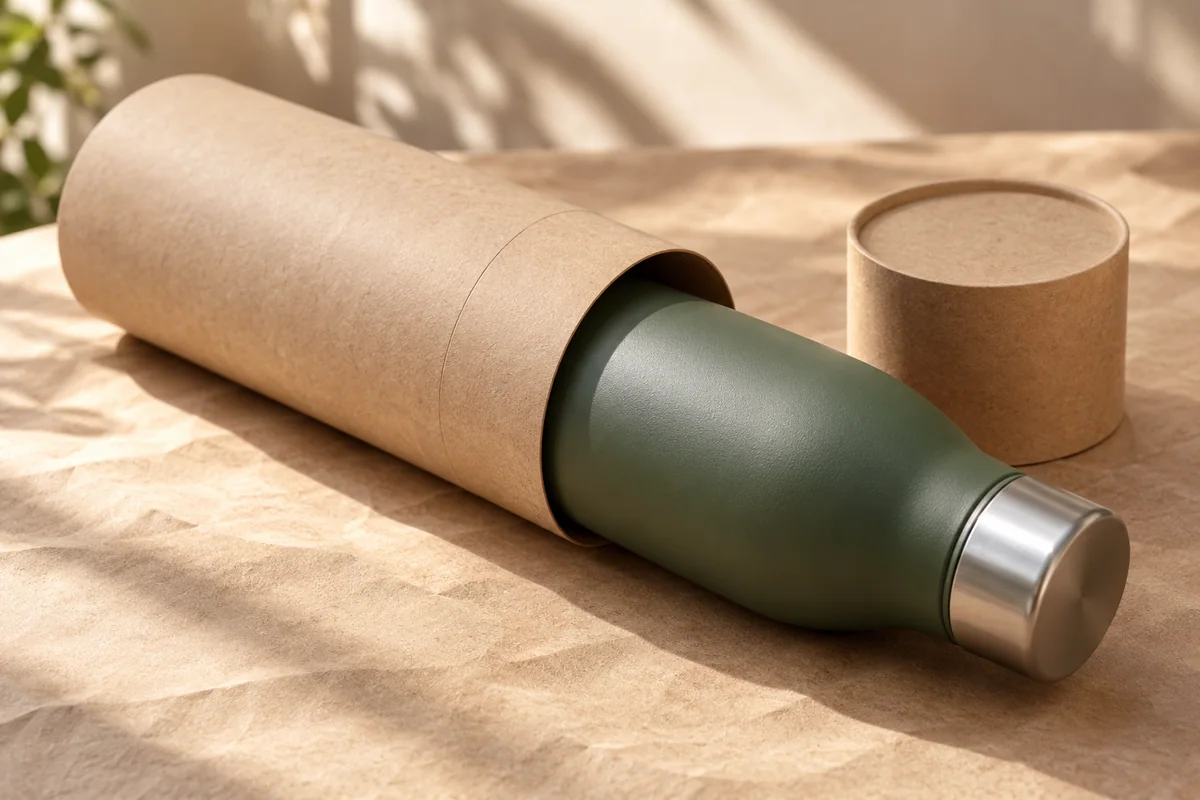
When a gift bottle arrives with a dull patch or linear mark, preserve its first visible condition before anyone tries to improve the photograph. A mark seen through a sleeve opening may be important evidence even while its cause remains unknown. Cleaning, polishing or rubbing it would change the condition the buyer is trying to understand.
The receiving decision is whether the mark can be located on an identified bottle and compared with the approved finish using the agreed non-destructive scope. Keep the bottle closed. This record concerns exterior appearance, not leak performance, coating chemistry, cleaning durability or food-contact suitability.
Start the record where the mark first becomes visible
Identify the receipt, carton, individual bottle and retained finish sample. Note the bottle variant and approved decoration reference. If an existing unit reference is unavailable, use a stable reference in the record under the receiving procedure; do not attach something to the marked surface to identify it.
State how the mark was first seen. Was the bottle already outside its sleeve, partly exposed through an opening, or visible through packaging? Record prior handling honestly. “Observed after unpacking; earlier surface condition unavailable” is useful evidence. It is more accurate than calling that image an untouched arrival view.
Describe the package separately. A crease in a sleeve and a dull patch on a bottle may appear in the same photograph without establishing that one caused the other. Preserve both locations and their relationship. Avoid claims that transport, factory packing or a particular decoration process caused the mark unless a separate investigation supports that conclusion.
Build a sequence that preserves context
Use an ordered photo record so the detail remains connected to the arrival. The following sequence is a proposed documentation method, not permission to remove packaging or carry out a test. Obtain only views allowed by the actual inspection instructions and stop if further handling is inappropriate.
| Sequence | Evidence to retain | Bottle-specific question it answers | Limit to record |
|---|---|---|---|
| A: arrival context | Carton and packaging references with bottle position | Which received object is involved? | Hidden bottle surfaces remain unobserved |
| B: first visible mark | Bottle as first observed, including sleeve edge if present | Where did the concern become visible? | State any handling already performed |
| C: exterior location | Permitted overview showing cap, decoration or another stable feature | Which side and height band contain the mark? | Do not infer its extent around an unseen curve |
| D: mark detail | Original closer view under recorded lighting | What visible shape, contrast or texture difference is present? | No rubbing, cleaning or polishing to reveal it |
| E: reference comparison | Correct retained sample and comparable exterior region | How does this visible area differ from the approved finish? | Physical comparison and photo-only comparison remain distinct |
| F: decision record | Evidence IDs, responsible owner and scoped response | What may happen to this bottle next? | A proposed remedy is not completed work |
Preserve the original images. If a copy needs an arrow or crop for discussion, identify it as an annotated copy and retain its original. Do not adjust a photograph to hide a patch or make the reference look closer to the delivery.
Describe the mark before naming a failure
Locate the observation relative to visible features: below the cap, beside the lower corner of the logo or opposite the decoration face. Note whether the image shows a narrow line, diffuse patch or change in reflection. If its extent cannot be reliably established, say so; a close-up without scale does not justify a precise measurement.
A curved bottle presents different reflections as the viewpoint changes. Datacolor’s appearance guidance identifies light, object and observer as relevant, and includes gloss, texture and finish in how an object looks. That supports recording the viewing setup; it does not diagnose a coating failure or supply a cosmetic tolerance. Datacolor colour and appearance guidance
Compare like regions under the agreed conditions where safe and authorised. Keep any difference between the setups visible in the report. A mark that is clearer from one angle should be recorded with that angle, rather than dismissed because another image hides it. Conversely, an image difference alone should not become proof of physical damage.
A fictional arrival sequence and its count
Imagine a fictional receipt of 72 individually counted closed bottles. Twelve identified bottles have the agreed exterior views reviewed. Bottle B02 shows a dull patch through its sleeve opening. Its available views also show a separate narrow line below the logo. B07 has a pale line on the opposite face, and B09 has a local change in reflection near the base.
The report contains four observations on three unique bottles. It records 12 bottles reviewed, nine with no differences observed in the specified views, and 60 whose exterior condition remains unchecked. No defect rate or lot-wide acceptance follows from these illustrative counts.
B02’s first image includes the sleeve opening. Later authorised views connect that patch to the bottle overview without altering the surface. The reference finish is shown separately and identified. The receiving owner records that no cleaning or polishing was performed during this sequence; if earlier handling is unknown, that uncertainty remains explicit.
Suppose the supplier replies that the patch “will wipe off.” Keep the statement with the issue, but do not attempt the suggested cleaning as part of this receiving comparison. The first-arrival record has already answered where the patch was seen and what evidence exists. The buyer still needs a scoped disposition from the responsible owner, with any different work separately assessed and authorised.
Keep the next decision narrower than the explanation
The buyer may request better comparable evidence, accept a defined appearance difference within their authority, or seek an agreed correction or replacement. Tie the decision to bottle IDs and the order’s actual cosmetic criteria. If those criteria do not resolve the mark, ask the owner for a decision rather than inventing a scratch length or gloss threshold.
A claim that the bottle is safe, dishwasher-resistant or made from a particular metal cannot be established by this exterior sequence. A supplier’s causal explanation also does not close every requirement. Keep product documentation and any specialist review separate from the appearance response.
For replacements, record the new receipt and bottle references, the agreed comparison performed and the decision. Preserve the earlier evidence rather than substituting a clean replacement photograph for the original bottle. If a recount or expanded review occurs, distinguish newly examined bottles from repeat views of the same three.
Request first-arrival evidence in the service brief
For a 1688 bottle order, specify the retained finish sample, bottle variants, permitted unpacking and exterior-view scope, and the need to record prior handling. Ask who owns appearance decisions and what happens when the evidence is insufficient. The supplier-check guide provides the wider evidence-pack context.
Use Get a quote to ask whether that observation work is available and how it is priced and reported. An agreed progress record can show “B02 first-visible condition documented; appearance decision pending,” linked to the evidence, owner and next milestone. The medium and update frequency need agreement; no automated condition tracker or guaranteed outcome is implied.
Frequently asked questions
Should a sleeve or sticker be removed to reveal the full mark?
Only the actual receiving instructions and responsible owner can establish what unpacking is permitted. Record the exposed region and the obstruction first. Do not peel a sticker from the marked surface or force a tight sleeve to improve the evidence. If the full region cannot be viewed within scope, leave its extent unresolved and request direction.
Does pristine outer packaging rule out a surface problem?
No conclusion about the bottle’s full condition follows from an unmarked carton. The packaging view establishes what was visible on that package, while the bottle views establish their own limited observations. Keep both records without assigning where or when the mark arose. A causal explanation requires evidence beyond the packaging’s appearance.
Can a close-up be used to quote the scratch length?
Record a physical dimension only when it was established by an agreed appropriate method and the basis is documented. An unscaled close-up should support a location and visible description, not an invented measurement. If the extent matters to the appearance decision, ask the owner what additional evidence is appropriate without altering the surface.
What if the same bottle appears under two receiving references?
Resolve the identity before adding affected-unit totals. Retain the original image references and document which entries refer to the same bottle, including any uncertainty. Two reports can describe two observations on one unit. If identity cannot be established, present the ambiguity rather than asserting either two affected bottles or a confirmed duplicate.
Sources
Discuss a sourcing request related to this article.Preserve Bottle Arrival Marks Before Altering the Surface