
Separate a Licensed Gift Reorder from Permission to Distribute Leftovers
Separate permission for new licensed gift production from existing-stock distribution. Record the actual agreement, event, window and rights-owner decision.
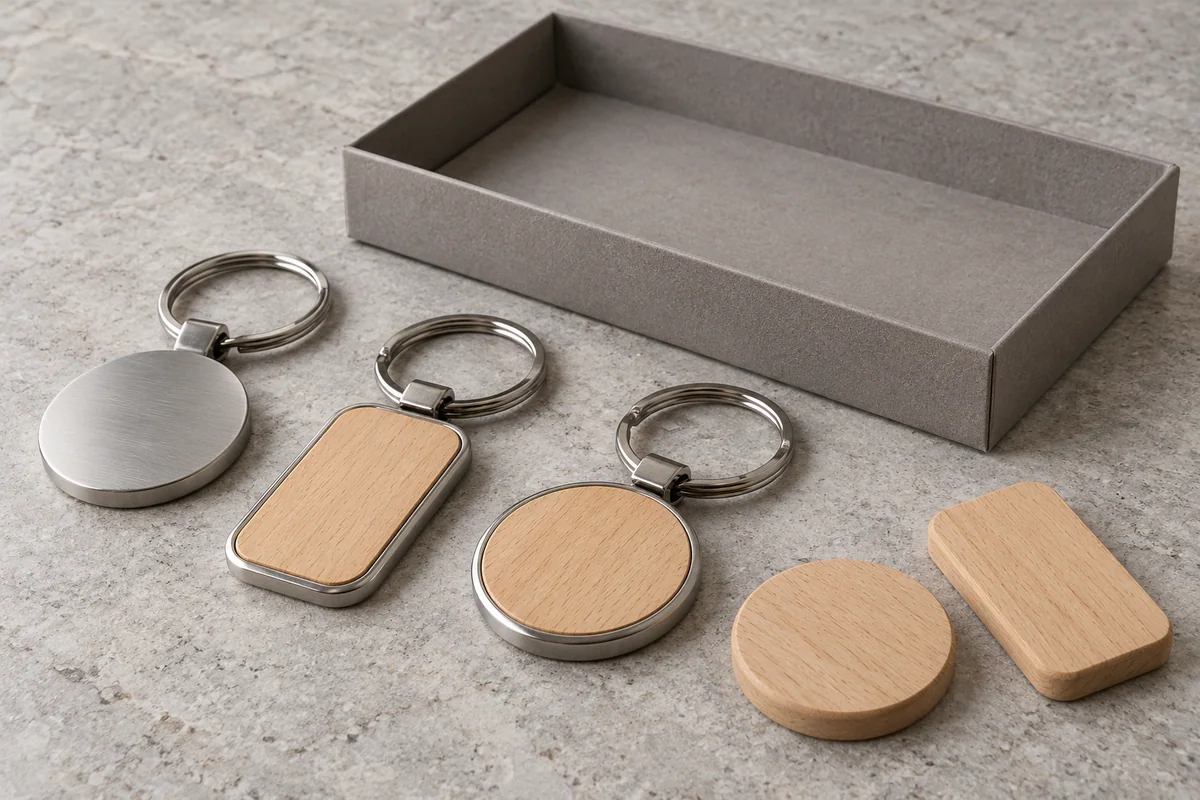
Separate permission to make another licensed gift run from permission to distribute gifts already made. When a campaign crosses an agreement window, the same artwork can appear on two physically identical keyrings while the proposed actions need different rights answers. A request to “repeat the order” can conceal that distinction.
Start with an identified licensed gift, its actual agreement and a named next event or campaign. The deliverable is an action-and-window comparison for existing gifts and new production. It records the rights holder’s or authorised contract owner’s determination for each proposal; it does not interpret an unseen licence or establish ownership of the stock.
Describe the action before retrieving the permission
Write separate proposals for distributing identified finished goods, manufacturing additional marked goods and changing the event, destination or distribution method. If the plan includes retail sale and free event gifts, describe those uses separately. The word “remaining” should identify goods already manufactured, rather than a quantity someone hopes to make before an event.
Keep the existing population reference beside the proposed new-run reference. This is enough to distinguish the rights questions without rebuilding a stock ledger. A warehouse balance may establish how many gifts are recorded there; the comparison asks what the relevant rights decision covers.
WIPO’s assignment and licensing overview distinguishes licensing use from transferring IP ownership and describes merchandising as applying protected material to consumer goods. This is general background. The rights, territory, proposed use and actual agreement still need appropriate qualified assessment.
Recover the agreement scope for this gift
Identify the artwork issue, product configuration, applicable agreement version and any relevant later instruction. Preserve the provisions or references the authorised owner needs to assess manufacture and distribution. Where the arrangement identifies a manufacturer or decorator, include that party rather than assuming every supplier may perform the work.
Give the reviewer the next event, intended recipients as a group, distribution method, destination and proposed window. Use the actual product and artwork references already established. This article does not reopen sponsor prominence or decide whether the files have reached the printer.
A missing agreement should remain a missing agreement. An old invoice, a retained sample or a supplier’s ability to reproduce the design can help identify the earlier job, but they do not supply the absent permission. The souvenir buying guide covers earlier artwork-rights and product-format questions.
Read an existing-stock provision at its stated scope
Ask the authorised rights or contract owner how the agreement handles each proposed action after the relevant expiry or termination event. Record its conditions and any outstanding approval separately. Do not supply a standard grace period or assume that an existing-stock provision renews manufacture rights.
The University of Oregon’s licensing definitions provide a rights-holder-specific illustration: its sell-off entry concerns selling existing inventory within an agreement-governed window. Its promotional-item entry addresses a distinct distribution use. The university expressly calls these working definitions for context, not legal definitions or advice. They do not themselves authorise free giveaways, donation or new manufacture under another agreement.
For a real campaign, ask an action-specific question: does the identified provision cover giving these finished gifts to this audience at this event during this window? If the owner needs legal interpretation, obtain that through the appropriate adviser. Preserve an unresolved answer instead of widening a retail-sale clause to match the campaign.
Compare forty existing keyrings with twenty proposed additions
All goods, artwork, dates, agreements and decisions below are invented. In a fictional campaign year, an organiser holds 40 finished keyrings bearing visually timeless artwork L-8. It wants 20 additional keyrings for November event E-9. The fictional authorised rights owner confirms that the identified 40 may be given away at E-9 through 30 November; permission for new manufacture ended on 30 September.
The supplier says it can make the extra 20 using a stored die. Separately, the organiser proposes diverting 10 of the existing 40 to E-10 in another territory. That is an alternative use of a subset, not ten additional pieces of stock.
| Proposed action | Goods or run | Relevant fictional window | Rights-owner determination | Supported scope or open question |
|---|---|---|---|---|
| Give existing gifts at E-9 | Identified 40 finished L-8 keyrings | Through 30 November | This distribution expressly permitted | Rights basis recorded for those goods and E-9 only |
| Manufacture additional gifts for E-9 | Proposed new run of 20 L-8 keyrings | Manufacture permission ended 30 September | No new manufacture permission supplied | Extra 20 remain unsupported for production |
| Divert existing gifts to E-10 | Proposed subset of 10 from the same 40 | E-9 permission does not answer E-10 | Other territory and event unresolved | No supported diversion decision |
The record supports the stated E-9 distribution scope for 40. It does not establish permission for a 60-piece manufactured or distributed programme. The offered die reuse changes neither the action nor the fictional manufacture window. The proposed E-10 subset must remain recognisable within the original 40 so that later responses are not counted as new inventory.
If the rights owner later addresses E-10, record the exact response and any effect on the E-9 plan. Do not invent a favourable outcome or silently replace the earlier permission. Likewise, a request to extend manufacture remains a request until the authorised determination and conditions are established.
Carry only the supported action into the next commitment
Give purchasing and distribution owners a concise statement naming the artwork, identified goods or proposed run, authorised action, event, destination, window and unresolved conditions. Reference the actual decision and its issuer. A broad label such as “licence checked” loses the distinction the comparison was built to preserve.
Rights support leaves stock condition, physical access, dispatch arrangements, supplier capacity, current price and purchase authority to their separate evidence. It also provides no permission for supplier portfolio photographs, artwork edits or another retail channel. Those uses need their own applicable decisions.
For a gift quote enquiry, describe whether the request concerns supported new production or an unresolved production proposal. Keep confidential licences out of the public form and arrange necessary restricted evidence with an authorised contact. The practical result is a precisely bounded next commitment, with the remaining rights question visible.
Frequently asked questions
Can permission to distribute remaining gifts cover new manufacture?
Check the actual agreement and obtain the authorised owner’s action-specific determination. The fictional E-9 permission covers identified finished gifts only; it supplies no basis for producing the extra 20. Do not generalise that example into a rule for every licence.
Does owning finished stock or a stored die settle reproduction permission?
No rights conclusion follows from that fact alone. Keep the stock or tooling record as an input and establish the applicable permission for the proposed production. This comparison does not decide title, custody, access or the legal effect of a particular invoice.
Does a sell-off clause necessarily include free giveaways?
Its wording and applicable interpretation must answer that question. The University of Oregon’s cited working definition concerns sale of existing inventory; it is not permission for another programme’s giveaways. Ask about the exact proposed distribution instead of extending the term yourself.
What changes when the next event or destination differs?
State the changed proposal and ask whether the actual rights determination covers it. Preserve the earlier scope while the new question is open. In the fictional example, E-10 concerns 10 of the existing 40, so it must not create a second stock total.
Sources
Discuss a sourcing request related to this article.Separate a Licensed Gift Reorder from Permission to Distribute Leftovers