
Agree a Tote Fold That Shows the Intended Gift Face
Use a fold-state map to choose which approved tote face appears in the gift box and how the recipient recognises the handles and unfolds the bag.
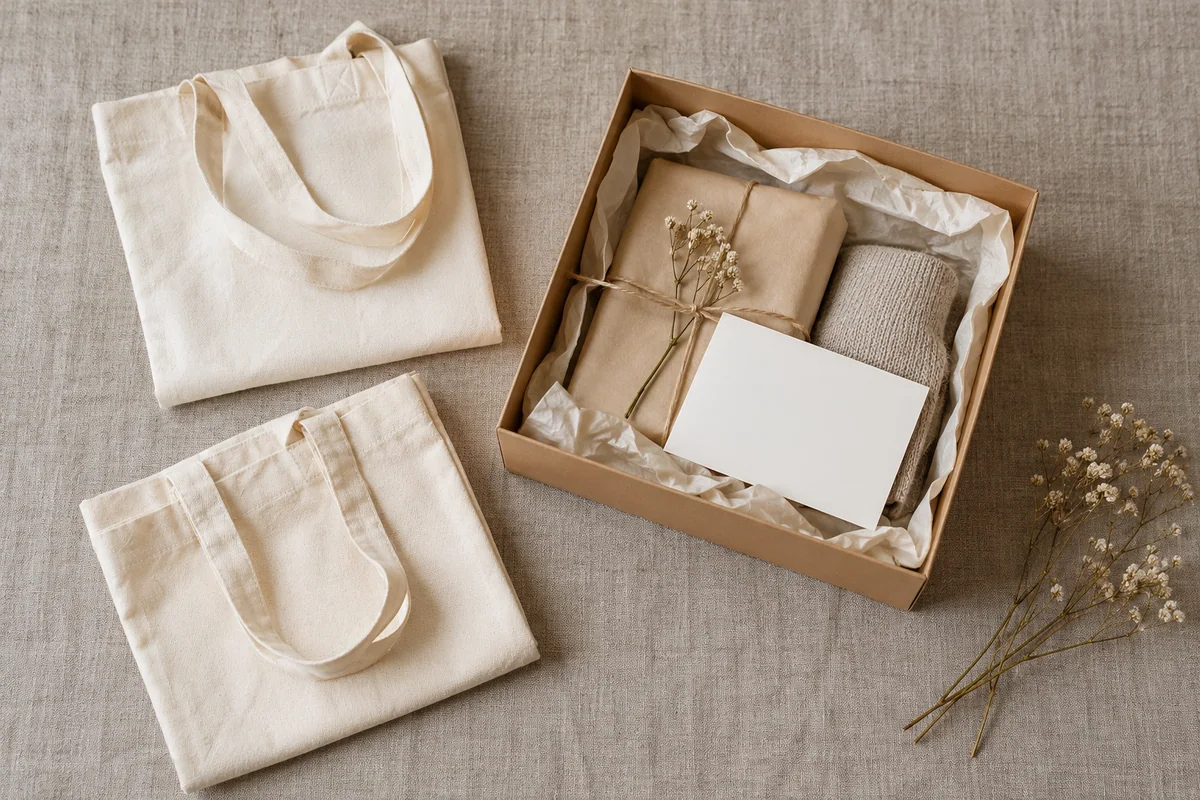
Choose a tote’s gift-box fold from the approved sewn bag in its intended presentation state. A correctly printed motif may disappear beneath a tuck, while both handles can become difficult to identify under the folded body. The buyer needs an agreed fold and visible face before the packer repeats the arrangement.
To plan the tote’s presentation, create a fold-state map tied to the actual bag and box. The map should show where the folds occur, which part of the existing motif remains visible and where the handles rest. Keep the approved artwork unchanged while comparing presentation alternatives.
Define what the folded tote should show
Name the bag face using a recognisable feature from the approved reference, such as the decorated side or a specified pocket. Identify the top opening and handle roots in the starting view. Avoid relying on “front” when the photographer and packer may orient the bag differently.
Ask which visible result matters in the open box. Does the buyer want the complete approved motif, one deliberate portion of it, or an undecorated face? Record that choice before folding. A partial motif can be intentional, but the packer should not infer that intention from a photograph cropped around the box.
Keep visibility and fit as separate entries. A fold may show the desired face but fail to represent the bag within the chosen box’s permitted arrangement. Conversely, a compact folded shape may conceal the feature the buyer wanted to lead. Request an alternative if the two objectives conflict rather than approving whichever happens to fit first.
The tote sourcing page provides the wider product context. This decision uses the approved sewn bag; it does not redefine its printable panel, decoration method or motif size.
Use the finished bag, including its handles
Identify the actual bag, construction and approved decoration reference, plus the chosen box and any required layers. A flat fabric sample cannot represent handle roots, a sewn pocket or the folded body in the same way as the completed bag. Name any substitute rather than treating it as equivalent.
Use only handling permitted for that product. The aim is to observe an ordinary proposed fold, not to create a permanent crease. Do not introduce ironing, steaming, wetting, pressing equipment, adhesive or extra ties as unapproved ways to make the sample resemble a rendering.
Show the handles explicitly at every relevant state. Their placement should make clear which parts belong to the tote and where they can be found when the recipient unfolds it. Do not assume that a handle draped over the motif is a decorative flourish the buyer accepts, or that handles concealed underneath remain obvious.
Include approved surrounding gifts in the final view. A notebook over a folded corner may change visibility and access. Record that dependency without changing the tote artwork.
Build a tote fold-state map
Start with an identified view of the complete bag. Follow it with the meaningful folded states and the final in-box view. Reference folds to features another person can locate on the actual bag, and retain any agreed dimensions with their measurement basis. Do not invent a standard fold allowance.
This original worksheet records a proposed presentation sequence. Its references should point to photographs or drawings of one identified issue.
| Bag face | Fold location | Visible motif area | Handle placement | Unfolding reference |
|---|---|---|---|---|
| Approved decorated face, starting state | None; identify top and sides | Full approved face represented | Both handles shown at their roots | Starting view T-0 |
| First folded state | Named edge and fold line on reference | Exact region remaining exposed | Position after this fold | Intermediate view T-1 |
| Final folded body | Remaining folds or tucks identified | Complete, partly covered or deliberately absent | Resting position of each handle | Folded view T-2 |
| Tote inside chosen box | Same fold, with neighbouring gifts present | Area visible at lid opening | Visible or covered parts stated | In-box view T-3; permitted return sequence |
Do not allow the final image to conceal a different fold underneath. If the underside matters to reconstructing the arrangement, add a labelled view obtained within permitted handling. Distinguish a proposed sequence drawn with arrows from an observed unfolding sequence.
The unfolding reference should let the reviewer understand which ordinary action exposes the handles and opens the bag. If that route is unclear, record the missing state. Avoid asking someone to tug harder on a concealed handle to resolve the drawing.
Compare two fictional folds without changing the print
Consider fictional tote T-4 with approved abstract motif M-4 and box X-4. The buyer wants the motif’s central shape visible at first opening and both handles identifiable. All objects and observations in this comparison are invented.
| Fictional arrangement | Motif at lid opening | Handle relationship | Decision |
|---|---|---|---|
| Fold A: inward top tuck | Central shape partly hidden by the tuck | Handles concealed beneath the folded body | Does not represent the requested presentation |
| Fold B: revised body fold | Central shape remains visible | Handles rest together beside the visible face | Candidate for the intended view |
| Fold B in the full gift layout | Notebook corner partly covers the motif | Handles remain identifiable | Revise the neighbouring placement before approval |
The first correction is the fold, not the artwork. B demonstrates the intended face in its isolated view, but the full-box comparison reveals another obstruction. The buyer asks for the notebook placement to be revised within its approved arrangement options, then reviews the same tote fold with the actual neighbouring gifts.
If the chosen box cannot represent both the intended motif and the required surrounding contents, identify the unresolved choice. The buyer can reconsider the presentation priority or request an authorised package alternative. Moving the motif or changing the bag is a separate decision and should not be hidden inside a folding instruction.
Approve a repeatable reference with honest limits
Record the selected fold issue, visible-face requirement, handle resting positions and full-box view. Ask the packer to confirm that the reference is understandable for the actual sewn bag. Preserve any ordinary-unfolding limit or difference between the reviewed mockup and proposed final arrangement.
A neat sample does not justify a wrinkle-free promise, a wash claim or a prediction about the bag after storage and delivery. No material identity, lifetime or environmental result follows from the fold map. Keep required information and protective layers in place unless the responsible owner has approved a specific change.
Connect this fold decision to the broader gift-set kitting checklist. The custom-gift progress record can identify the chosen issue, evidence, open presentation question and next owner. Agree how the record will be communicated.
Use Get a quote to describe the actual tote, intended visible face and requested fold comparison. Confirm whether the provider can perform that review and what its scope includes. The map is a buyer instruction proposal, not a quoted service or timing commitment.
Frequently asked questions
Should the full tote motif remain visible inside the gift box?
Only if the buyer chooses that as the presentation requirement. An intentionally partial view can also be specified, provided the exact visible region is agreed. Compare it in the full arrangement with neighbouring gifts present. Do not let an incidental tuck or a cropped photograph decide how much of the approved design recipients see.
What if the production bag differs from the folding mockup?
Identify the difference in the sewn configuration, handles, pocket or decoration reference and revisit the affected states. A fold developed on another bag may communicate the idea without representing the final result. Keep the old reference as background, then obtain the views needed to connect the selected fold to the actual approved bag.
Can the packer move the printed motif to suit the fold?
That would reopen the approved product artwork and needs a separate decision. First compare authorised presentation alternatives using the existing bag and motif. If those cannot meet the buyer's priorities, state the conflict and request a named change. Do not describe a print relocation as merely adjusting how the gift is packed.
Does an approved fold mean the tote will arrive crease-free?
No. The map records the presentation states actually reviewed. It supplies no storage, transport or fabric-performance result and no laundering instruction. If the buyer has a specific appearance requirement after delivery, ask the responsible owner to define its scope and evidence. Keep that question separate from agreeing the visible face and handle placement.
Sources
Discuss a sourcing request related to this article.Agree a Tote Fold That Shows the Intended Gift Face