
Separate Blank Gift Stock from the Next Branding Commitment
Separate eligible blank gifts, current campaign allocations and branding releases so unconverted goods do not become assumed finished stock or future supply.
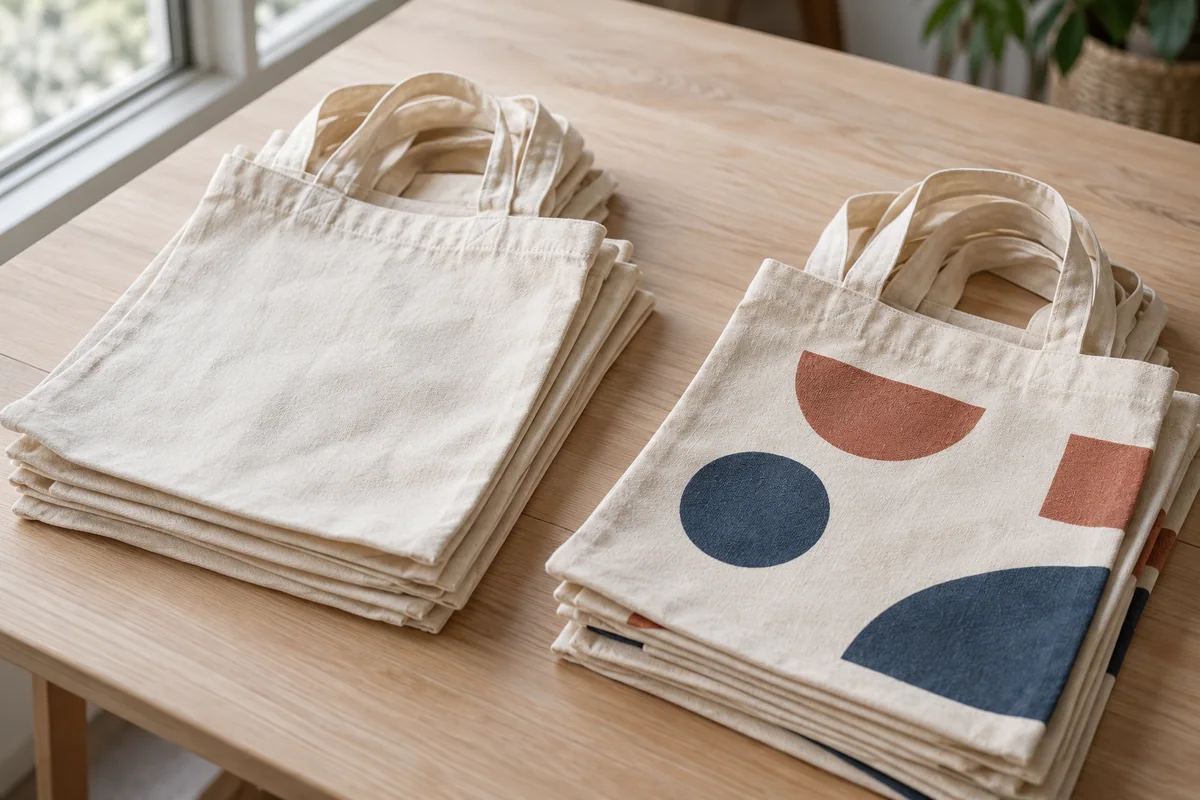
Decide how many held blank gifts may receive the next campaign’s branding before requesting decoration. A recurring programme may use one tote across several events while each event has a different approved message. The useful boundary is the quantity authorised to become campaign-specific, with the remainder explicitly left outside that decoration release.
Start with identified blank goods whose availability and permitted use are already supported. This article does not decide whether to buy a speculative reserve or calculate a reorder point. Its deliverable is a gift conversion-stage commitment ledger connecting an existing blank quantity to one approved campaign allocation and one bounded branding instruction.
Establish which blank item the campaign can use
Retrieve the exact blank reference and the actual evidence supporting the stated quantity. An old product listing, a previous invoice or a photograph of several totes cannot by itself establish the current eligible amount. If someone else holds the goods, obtain that custodian’s attributable statement and the existing authority for the intended use.
Keep the campaign’s approved gift configuration attached to the blank reference. A bag offered as visually similar may require another decision. The custom gift printing guide covers artwork, method and sample approvals; use their established outcome here rather than redesigning the logo or inventing print tolerances.
Ask the actual decoration provider whether it can work with the identified held blanks under the proposed scope. The fact that a company supplied the blanks earlier does not establish that it will accept them for a later decoration job. Record any unanswered requirement as a dependency before relying on the campaign-specific result.
Define the point at which a common gift becomes campaign-specific
Name the branding step covered by this decision and the already approved campaign treatment it will apply. The purpose is to prevent a general instruction such as “finish the totes” from consuming every blank that happens to be present.
Separate the confirmed campaign allocation from the buyer’s decoration release. The allocation states which current campaign requirement the quantity serves. The release states how much work the authorised owner allows under the agreed prerequisites. A provider’s proposal for a larger run does not increase either quantity without another decision.
Also distinguish approval from execution. A release for 24 totes establishes a permitted scope when its conditions are met; it does not prove that 24 totes have been printed or accepted. Keep the physical work state in the provider’s actual production record so the same approved quantity cannot appear prematurely as finished gifts.
Use a bounded sixty-tote illustration
All quantities, references and permissions below are fictional. Assume the buyer controls 60 eligible blank totes of reference T0, has confirmed a current allocation of 24 for Campaign C, and has approved decoration of those 24 against existing treatment C2. The illustration gives no actual provider commitment, price, schedule or completed work.
| Blank reference | Eligible blank quantity | Confirmed campaign allocation | Decoration release | Unconverted balance | Unverified provider capability |
|---|---|---|---|---|---|
| Fictional T0 lot | 60 before the release | 24 for Campaign C | 24 against C2, under existing prerequisites | 36 outside this release | Actual execution and acceptance still require evidence; no future service established |
The planned unconverted balance is 60 minus 24, or 36. Here it means the quantity left outside the approved decoration scope. Before any work occurs, all 60 may still be physically blank; the table is not evidence that 24 have already changed state. After verified execution, use the actual result rather than assuming every released item became an accepted gift.
The 36 remain blank candidates for a later decision. They are not 36 finished Campaign C gifts, a forecast for another event or proof that a future printer will be available. Likewise, allocating 24 now supplies no reason to buy another 24 blanks immediately.
Imagine a provider instead proposes decorating 30 in one run. The extra six would receive Campaign C’s message, reducing the planned blank remainder to 30 if the buyer authorised that changed scope. Ask whether there is an approved campaign purpose for those six. Keep the original 24-unit release unchanged while that question is considered. The proposal’s quantity cannot create six additional recipients.
Make leaving goods blank a documented choice
State why the remainder is outside the current release using the actual campaign evidence. Perhaps the next event’s message has not been chosen, or no later allocation has been approved. Record that uncertainty without predicting which branding will eventually be needed.
Confirm the practical arrangement with the party holding the blanks if continued holding is required. Ask what has actually been agreed, including any conditions or charges that affect the decision. Avoid describing blank retention as free storage, guaranteed flexibility or a saving. Obtain a scoped offer before making a commercial comparison.
The blank remainder also needs a clear instruction boundary. An approval for Campaign C should identify its applicable quantity so an old email cannot be interpreted as permission to decorate the whole lot. Agree how the provider will report a proposed quantity change through its actual process; this method assumes no automated reservation or production lock.
Revisit the branding decision when the next campaign is real
When another named campaign is ready, establish the remaining blanks’ current identity and eligible quantity, then obtain that campaign’s allocation and decoration approval. A prior balance is a starting reference to verify, not current availability. Existing artwork or tools may be relevant inputs, but their custody and permitted use require their own evidence.
Decide any new blank purchase separately from the next decoration commitment. A programme owner may want more undecorated goods, more branded gifts, both or neither. State those requests independently so a quote cannot blur the quantity being purchased with the quantity receiving a specific message.
For a gift quote enquiry, describe the exact held blank, the proposed campaign quantity and the already approved decoration reference. Request confirmation of the actual work scope, price and timing. Use permitted image previews for initial discussion and arrange original artwork separately with an authorised contact. A clear request lets the provider answer the proposed conversion without treating the whole blank balance as a production instruction.
Frequently asked questions
What does the 36-tote unconverted balance mean?
It is 60 eligible blanks minus the 24 covered by the fictional decoration release. It describes the quantity outside that release, not observed completed production. Before work occurs, all 60 can still be physically blank. The 36 are neither finished gifts nor an approved requirement for another campaign.
Should extra blanks be branded when a provider proposes a larger run?
Ask the campaign owner whether the additional branded quantity has an approved purpose, and obtain a separate decision on the changed scope and actual terms. A provider proposal cannot create recipients or expand the release. Keep the original quantity in force until an authorised change is established.
Can the remaining blanks be decorated later by the same provider?
Request current confirmation for the exact held blank and proposed later treatment. Prior supply or decoration does not establish future acceptance, capacity, storage arrangements, price or timing. Keep those dependencies open until the relevant party supplies an attributable response.
Does decorating 24 totes authorise buying 24 more blanks?
No. The decoration release commits a defined portion to one campaign message. Any new blank purchase requires its own supported programme need, offer and purchasing authority. Describe blank replenishment and campaign decoration separately even when the same provider is asked to quote both.
Sources
Discuss a sourcing request related to this article.Separate Blank Gift Stock from the Next Branding Commitment