
Reconcile Candle Gift Identity Across Vessel, Box and Order
Compare the declared candle variant on each accessible vessel and box with its order line, while preserving pairing evidence and unresolved contents identity.
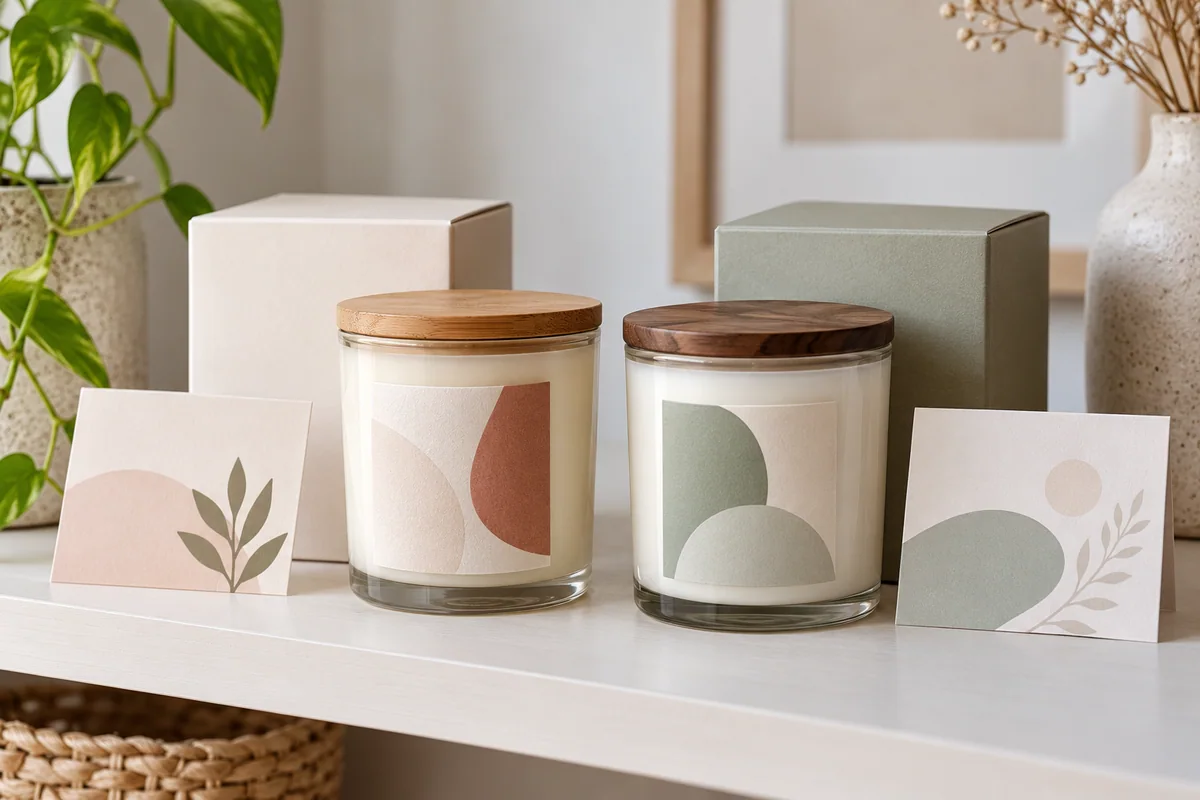
A gift candle’s vessel label, presentation box and order line can disagree even when the decorative artwork looks identical. Receiving should reconcile those three declarations before anyone changes a label or assigns the gift to a variant. A matching label set still does not identify the contents by itself.
Use a vessel–box–order record for the units actually observed. Keep candles closed and unlit. Do not open a vessel, break a seal, smell contents or burn a candle to decide which variant it contains. Colour, decoration and a familiar-looking lid cannot settle an unresolved fragrance or formulation identity.
Establish the declared variant schedule
Retrieve the approved order schedule and label/copy revisions. For each variant, identify the exact code and wording expected on the vessel and on the box. If the two use different code systems, obtain the approved mapping rather than insisting that their strings must be identical.
For example, a supplier may assign a short vessel code and a longer retail box code to the same declared variant. That relationship needs an authoritative order-specific reference. Do not infer it from a shared prefix, colour or position in a spreadsheet. Keep the original strings alongside the mapped variant.
Identify who can resolve a conflict: the buyer’s order owner, the supplier’s responsible traceability contact and any qualified product reviewer whose scope is implicated. The receiving team records the declarations. It should not choose the true contents by majority vote when two labels agree and one differs.
The candle sourcing page gives broader category context. This article addresses declared identity only; product assessment, formulation evidence and destination requirements remain separate decisions.
Preserve the vessel and box pairing
Assign a local receiving ID to the observed candle-and-box relationship. Record whether they arrived paired, were presented separately with a supplier-assigned pairing, or cannot yet be connected. A photograph of several loose vessels beside several boxes does not identify which box belongs to which candle.
Use only labels already accessible within the agreed observation scope. If a closed gift box hides the vessel label, leave the vessel field unobserved. Request existing packing evidence or authoritative trace records rather than opening it to complete this record. Any further physical work needs its own approved safe scope.
Capture the whole object and the relevant label detail together through linked image IDs. Keep box and vessel images under the same receiving reference only when their relationship is supported. Note the physical label location and any visible overlap, lifting or missing portion, without peeling or pressing it to improve readability. This records appearance, not adhesive performance.
Transcribe characters faithfully, including suffixes and leading zeros. If a character could be a zero or letter O, mark the reading uncertain. Keep the expected order value in a separate column; copying it into an unreadable observed field creates a false match.
Build the identity triad
Use the following worksheet once per identified unit or documented pairing. It is an editorial comparison method, not a certification record or an instruction to relabel goods.
| Record field | Vessel evidence | Box evidence | Order reference or decision |
|---|---|---|---|
| Unit and pairing | Local unit ID and accessible whole-vessel image | Paired box ID and basis for pairing | Order line to which this pair is assigned |
| Declared variant | Exact readable text/code or unobserved status | Exact readable text/code or unobserved status | Expected variant and approved code mapping |
| Label issue | Visible revision, or revision not printed | Visible revision, or revision not printed | Approved copy/label issue and comparison basis |
| Physical label state | Location; visible overlap, lifting or unreadable area | Location; visible obstruction or missing area | Further evidence needed without altering labels |
| Three-way comparison | Value compared with box and order | Value compared with vessel and order | Consistent declarations, conflict or insufficient evidence |
| Reconciliation | Supplier evidence tied to this vessel/group | Evidence tied to this box/group | Named authority, unresolved contents question and disposition |
Where a revision is not printed, do not invent one from the label’s appearance. Compare the available content with the approved reference within the actual scope, and record how the revision attribution was made or why it remains unresolved.
Keep supplier-declared trace information separate from direct observations. A packing record can explain which batch was intended for a box. It does not retroactively turn an unseen vessel code into a physically observed one.
A fictional comparison where matching labels still fail the order
Imagine an invented receipt of 200 candle gifts. Forty identified pairings have accessible exterior label evidence and undergo the agreed comparison; the other 160 are unchecked. All identifiers, quantities and observations below are fictional, with no fragrance or contents assessment performed.
| Fictional unit group | Units checked | Vessel declaration | Box declaration | Assigned order variant | Identity-record outcome |
|---|---|---|---|---|---|
| CG-01 through CG-32 | 32 | C1 | C1 | C1 | Three declarations consistent within scope |
| CG-33 through CG-37 | 5 | C2 | C1 | C1 | Vessel declaration conflicts with box and order |
| CG-38 through CG-39 | 2 | C1 | C1 | C2 | Vessel and box agree, but neither matches assigned order variant |
| CG-40 | 1 | Unreadable | C2 | C2 | Vessel declaration unresolved |
There are seven unique units with declared-identity conflicts and one additional unit with an unreadable field. A conflict involving two pairwise comparisons remains one affected candle. The 32 consistent records do not prove the wax, fragrance, safety or compliance of those products.
For CG-33 through CG-37, replacing the vessel labels with C1 would make the strings agree without proving the contents. For CG-38 and CG-39, swapping boxes would not answer whether the order allocation or the supplied variant was wrong. Preserve the current pairing and request a supported explanation before authorizing any correction.
Reconcile the conflict without erasing it
Ask the responsible supplier contact to identify the affected scope and provide the order-specific trace evidence behind its explanation. Distinguish a label application error, an incorrect box assignment and a different supplied variant as possible explanations awaiting evidence. Do not select one because it is the easiest warehouse remedy.
If the supplier uses an alias, retain the observed code and attach the approved mapping and authority. If it proposes corrected labels or replacement goods, require the exact target group, revised evidence and buyer decision. The responsible qualified reviewer must address any product-information or safety question outside this administrative identity comparison.
Recheck the relevant vessel, box and order declarations after an authorized correction. Identify replacements as a new group linked to the original discrepancy. Retain any still-inaccessible labels, and do not describe documentary reconciliation as physical verification of contents.
Request the evidence milestone the order needs
For agreed custom-gift progress reporting, record the triad review stage, supporting images and trace references, responsible owner, conflict and next decision. Confirm reporting medium and frequency with the service team. The record does not imply automatic scanning, a live dashboard or guaranteed resolution dates.
For a 1688 candle-gift receiving request, use Get a quote with the declared variant schedule, order context and exact exterior-label scope. Provide links, descriptions or PNG, JPEG, WebP and GIF previews; arrange confidential records and original files separately. Confirm capabilities, fees and timing. The outcome should state which declarations were reconciled and what contents evidence remains unresolved, so attractive packaging cannot stand in for an identity decision.
Frequently asked questions
Do matching vessel and box labels prove that the candle contains the ordered fragrance?
No. They support consistency between the observed declarations. The order assignment must also agree, and actual contents identity needs its own applicable trace or product evidence. Do not smell, open or burn the candle to bridge that gap in this receiving workflow.
What if the supplier uses different codes on the vessel and gift box?
Different strings can be consistent only when an authoritative order-specific mapping supports the relationship. Retain both codes exactly as observed and cite the mapping and its owner. Similar prefixes or matching packaging colours are not enough to establish that relationship.
Should an unreadable vessel label be copied from the order schedule?
No. Record the vessel field as unreadable or unobserved and retain the expected code separately. Existing packing evidence or a clearer permitted exterior view may help, but the source of each value must stay explicit. An expected value is not a physical observation.
Can a warehouse simply replace the label that disagrees with the other two records?
Not from this comparison alone. Preserve the original pairing and ask the responsible authority to establish what the conflict means and authorize any correction. Matching the printed strings by relabeling does not establish the contents and may leave the underlying identity problem unresolved.
Sources
Discuss a sourcing request related to this article.Reconcile Candle Gift Identity Across Vessel, Box and Order