
Replace a Lost Cap or Seal Before Reordering the Whole Branded Bottle
Compare exact replacement caps, supported service kits and complete bottles while keeping fit, generation and unresolved leaks separate.
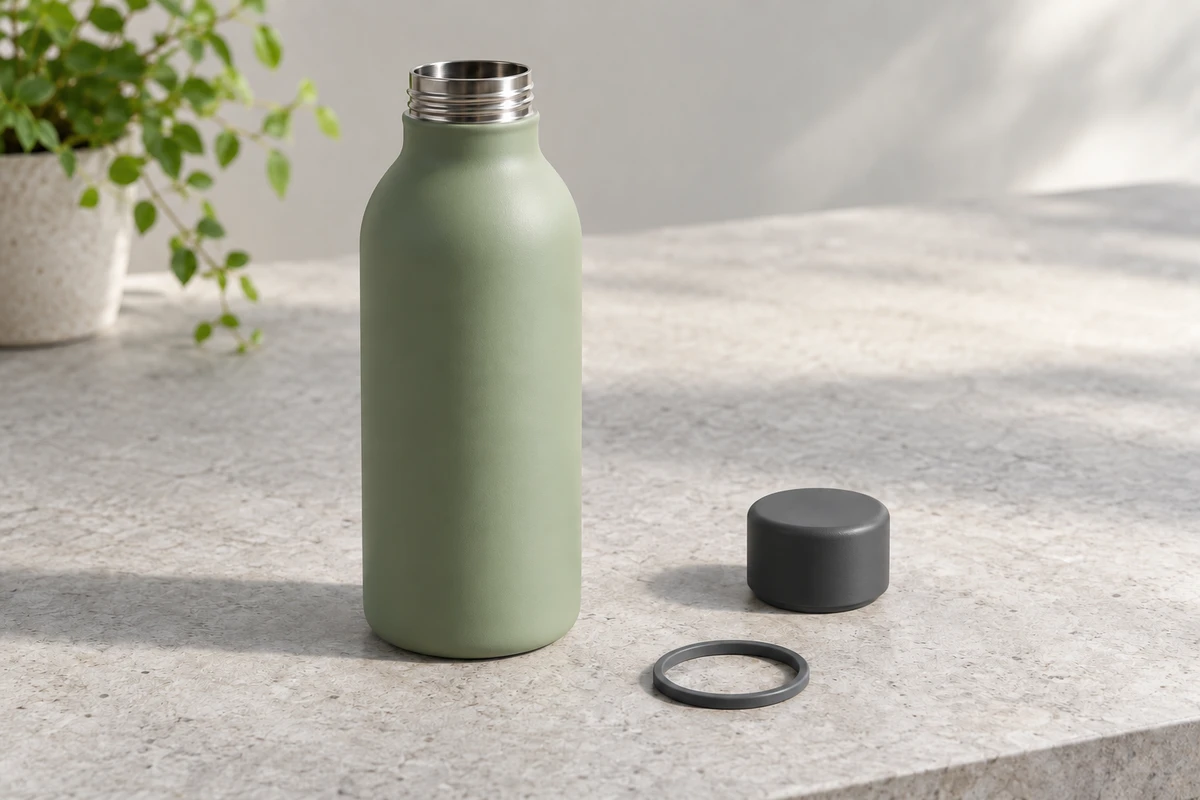
A branded bottle replacement cap reorder can answer a lost-cap request without replacing the bottle its owner still uses. A supported service kit may answer a different, assessed closure-part need. The useful buying choice is therefore between a specific part, a complete closure and a complete bottle, with unresolved condition reports kept outside that choice until they are assessed.
Begin with what remains in the original recipient’s possession. This approach concerns their own previously issued bottle. It does not approve returned drinkware for another person, diagnose a leak from a message or assume that every bottle can be serviced.
Identify the missing item before choosing the remedy
A lost cap is a different request from a missing bottle. A manufacturer-confirmed replaceable seal need is different again. Ask for the identified bottle and closure references and the current reported need, using an appropriate product-support contact for condition questions.
If the report simply says “the bottle leaks,” do not convert it into a gasket order. The cause and the suitable next action remain unresolved. Likewise, damage to the bottle body should not be treated as a closure-only problem because a replacement cap is easier to quote. The buyer’s role is to purchase the supported remedy after the relevant assessment, not to diagnose it through stock selection.
Keep the object with its owner distinct from unused inventory. A part intended for one retained bottle is not an extra complete gift available for a new campaign. This distinction matters when a replenishment request combines lost components with gifts for people who have no bottle at all.
Match the bottle family and closure generation
Identify both the bottle model and the cap version. A familiar product name can conceal a generation change, and a broad size label can cover different closure systems. Preserve suffixes and version numbers in the enquiry rather than shortening them for convenience.
Klean Kanteen’s replacement-parts guide separates Classic, TKWide and Wide families, describing different mouth and thread arrangements. Its UK Wide Cap Maintenance Kit names Café Cap 1.0 among supported caps and explicitly excludes Café Cap 2.0. These brand-specific examples show why a family name alone may be insufficient; they are not fit instructions for private-label bottles.
Ask for manufacturer-backed compatibility for the exact offered part and retained bottle. A similar diameter, matching colour or visually similar thread does not establish that combination. Do not ask recipients to trial-fit assorted caps or adapt a seal to find something that appears to work. Where the reference cannot be recovered, keep the proposed part unconfirmed rather than treating a generic same-size listing as a substitute.
The water-bottle sourcing guide helps frame the product description for an enquiry. Carry the exact bottle and closure identifiers into that description so the requested replacement is tied to the actual original gift.
Choose the supported level of replacement
A service kit is a candidate when the manufacturer provides the relevant parts and normal maintenance instructions for that closure, and the responsible product contact has established that the route suits the case. The kit contents matter: one kit might contain multiple seals, while another replacement is sold as a complete cap. Do not translate “six kits” into “six gaskets” without checking what the offered unit actually contains.
A complete original closure may be the more suitable comparison when the cap is lost, when the supported remedy is a whole cap or when no separate service part is offered. A complete bottle is a separate option for someone whose bottle is missing, or where the assessed need cannot be met by a supported part route. None of these choices is automatically the cheapest or the correct remedy for an unidentified condition.
Use the manufacturer’s normal care and replacement material for the exact product. This purchasing comparison does not supply disassembly instructions, substitute O-ring materials or a repair method. A part that can be purchased is not, by that fact alone, suitable for every recipient to install or for every used bottle to continue in service.
Check what the replacement changes in everyday use
An alternative cap can change more than appearance. Compare whether the original required a closed cap removed for drinking, a drink-through opening or another defined function. Confirm the proposed closure’s relevant use and care limits for the intended beverage and activity. Do not silently carry an old hot-drink or leakproof claim into a different cap combination.
Branding can also be affected. If the campaign mark was on the original cap rather than the retained bottle body, a plain replacement changes the visible gift. Decide whether that is acceptable before requesting new decoration. If the mark remains on the body, ask whether redecorating the replacement closure serves any actual requirement instead of automatically repeating the original presentation.
Model- and market-specific product and food-contact evidence remains a separate requirement. The manufacturer examples above do not certify a sourced gift, establish its materials or approve its continued condition. Keep the chosen replacement’s identity connected to the evidence rather than borrowing claims from a similar retail product.
Compare delivered remedies for the same cases
Request a complete offer for the exact caps or kits, including the stated version, pack contents, normal instructions, packing and agreed delivery route. Compare a complete-bottle option against the same resolved recipient needs. A component-only price and a delivered decorated bottle price do not yet describe equivalent scopes.
Check how the right part will reach the right owner. A continuing programme may use a central collection point with clearly identified packs. Other arrangements may need separately agreed delivery. Include that practical scope in the comparison, without assuming the site’s enquiry form provides an aftercare portal or automatic part matching.
No standard spare percentage follows from the number of bottles issued. Buy against the current supported needs and the actual quoted pack quantities. If the supplier’s offer creates spare caps, identify them as surplus to the current requests. Do not present them as a measured future failure rate or a guaranteed saving from avoiding complete bottles.
Keep caps, kits and complete bottles as separate units
Consider a wholly hypothetical programme with 30 distinct requests about bottle B1. Eighteen identified bottles need lost cap C1 replaced. A responsible product owner has confirmed six other requests qualify for the manufacturer’s service kit K1. Two bottles are missing entirely, while four leak reports have no settled cause. Every code, count and decision in this example is invented for explanation.
Subject to the actual programme and product decisions, the mixed enquiry is for 18 C1 caps, six K1 kits and two complete B1 gifts, with four cases still open. The 18 + 6 + 2 resolved requests total 26; adding four open cases gives 30. That is not an order for 30 bottles or 30 seals. A same-size cap C2 remains outside the options unless its exact fit and intended use are supported.
For a gift quote enquiry, provide the product references, non-personal descriptions of the resolved needs and separate quantities by purchase unit. Use relevant product links and supported image previews; arrange original evidence documents separately with an authorised contact. The outcome should be a specific, usable replacement route for each assessed need, retaining the original recipient’s bottle where that route is genuinely supported.
Frequently asked questions
Can a replacement bottle cap avoid ordering a whole new branded bottle?
It can be a useful option when the original owner retains an appropriate bottle and the exact replacement closure is supported for it. Confirm the current need, fit, intended use and delivery route before comparing the complete cap offer with a whole bottle.
Why does a matching mouth size not prove a cap or gasket fits?
Bottle families and closure generations can differ even when their size descriptions look similar. Obtain exact model and version references and manufacturer-backed compatibility. Do not use approximate diameter, appearance or trial fitting as approval.
When does a gasket request need a complete-cap or whole-bottle decision?
Use the supported remedy for the assessed case. A specified service kit may suit a confirmed replaceable-part need, while a lost cap may require a complete closure and a missing bottle a complete gift. An unexplained leak remains a product-support question.
Should a programme order spare caps for every bottle already issued?
The original issue count does not establish current part demand or a future failure rate. Quote the supported current requests by cap, kit and complete-bottle units. Any surplus created by an offered pack quantity should remain visible.
Sources
Discuss a sourcing request related to this article.Replace a Lost Cap or Seal Before Reordering the Whole Branded Bottle