
Route the Right Language Card into Each Gift Presentation
Assign approved English and Traditional Chinese gift cards to the right recipient groups and pockets without turning a bilingual master file into a substitution.
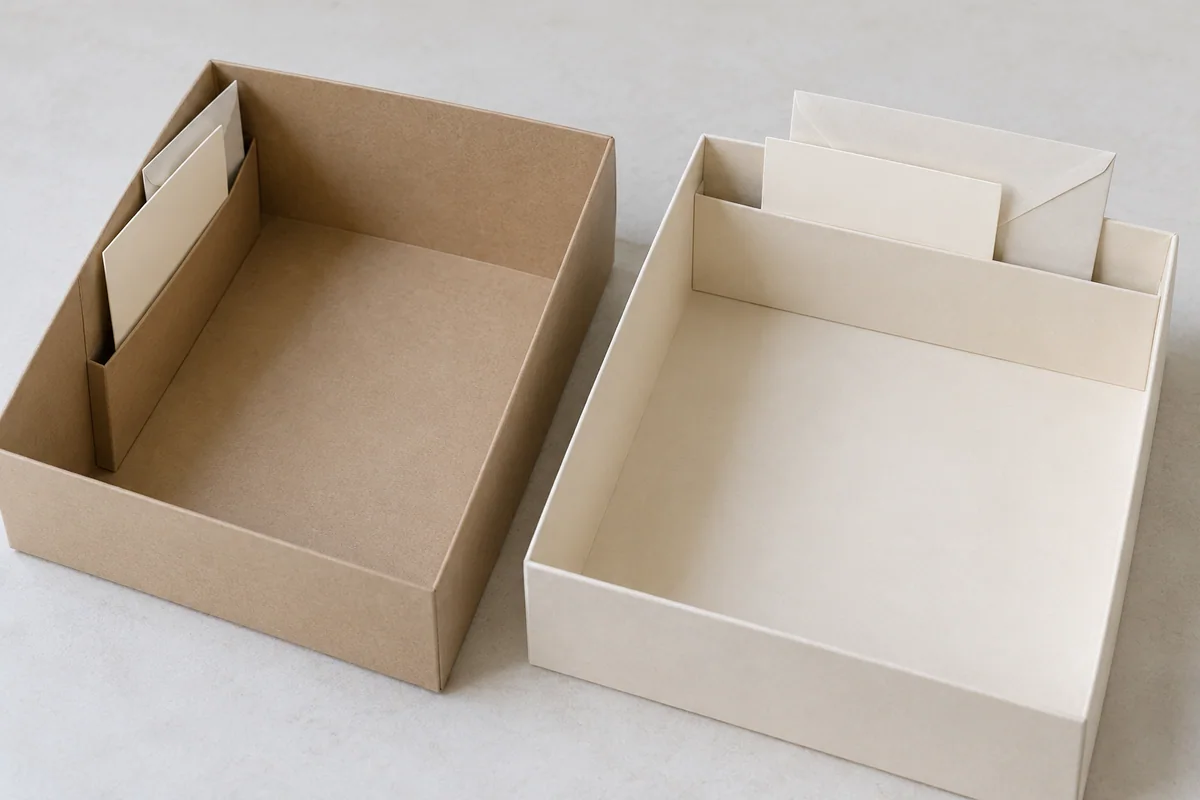
Choose the approved language edition for each recipient group, then give that edition a defined pocket and reading orientation in the gift presentation. A file containing two languages does not tell the packer which printed card belongs in a particular box. Nor does the correct card help the welcome moment if the recipient finds only its blank reverse.
Gift card language pocket routing connects three decisions: who receives which approved edition, where that physical edition sits, and what the recipient encounters on opening. Start after the copy, translation and card construction have been approved. The task here is placement and assignment, without rewriting messages or substituting product instructions.
Separate group assignment from personal identity
Use the buyer’s approved recipient-group schedule. Name groups neutrally, such as G-E and G-T, and record the language edition assigned to each. Do not infer language from a recipient’s name, destination address or appearance. An unresolved preference belongs with the organiser who controls the assignment.
A group can receive a single-language card or an already approved bilingual card. The physical artifact must be identified in either case. “English/Chinese artwork” could describe one bilingual edition, two separate editions or a working file containing alternatives. Record the exact printed edition reference and the approved language coverage, including the specified script where relevant.
This article concerns the gift message. Keep any required product information in its separately approved position. A welcome card does not replace instructions, safety information or other required documents simply because it uses the recipient’s language.
Read the pocket from the recipient’s viewpoint
Orient the layout as the recipient is expected to open the gift. Name a fixed top edge and the pocket opening. Record which card face is visible before removal and which way the greeting reads once the card is taken out. For an envelope, distinguish the envelope’s visible face from the message inside; a blank front does not demonstrate the enclosed edition.
Use the approved physical card and envelope in the proposed pocket. A substitute blank of another size can explain a concept while leaving the actual edition’s visibility unresolved. Do not refold, crop or resize the approved card to fit the position. Ask for a pocket alternative or an authorised card-format change through the responsible owner.
Be precise about discovery. “In the lid” might mean a clearly visible pocket, a closed flap that conceals the card, or a position behind a decorative layer. Specify the intended encounter: greeting visible on first opening, envelope discovered before the main gift is lifted, or another agreed presentation moment.
Build the language-edition-to-pocket matrix
All groups, edition codes and placements in this worksheet are fictional examples. Replace them with the buyer’s approved references and an identified layout.
| Recipient group | Approved card edition | Pocket orientation | Language fallback | Exception owner |
|---|---|---|---|---|
| G-E | C-EN revision 3 | Lid pocket L1; approved greeting face upright | None authorised | Event message owner |
| G-T | C-ZHT revision 2 | Lid pocket L1; approved greeting face upright | None authorised | Event message owner |
| G-U, undecided | Unassigned | Reserve location only; no edition placed | Decision required | Recipient-group coordinator |
“None authorised” is an actionable instruction: preserve the assigned requirement and report a missing edition. It does not mean the packer may choose a convenient alternative. A fallback should name a specific already approved artifact and the exact groups for which it is allowed.
Attach the group-assignment issue, card approval reference and pocket view to the matrix. Add a record of what remains unseen, such as the edition inside an opaque envelope. The evidence note should identify the person who can settle that gap. The general gift-set kitting checklist supplies the wider assembly context; this matrix keeps the language decision explicit.
Compare a fifty-gift event without translating anything
Imagine a fictional event with thirty gifts assigned C-EN and twenty assigned C-ZHT. The approved plan requires one assigned card per gift, so the placement plan has thirty English-card positions and twenty Traditional Chinese-card positions. These are planned allocations, not accepted-stock counts or evidence of finished packing.
Proposal A uses a single bilingual master file as justification for printing and placing fifty bilingual cards. That proposal changes the assigned physical edition. Even if the underlying wording has appeared in approved files, the master file does not authorise this substitution. Ask the message owner to approve a new edition and group assignment, or retain the original thirty/twenty split.
Proposal B retains the approved separate editions and uses the same lid-pocket location for both. In the fictional mockup, C-EN’s greeting faces the recipient while C-ZHT has been inserted with its reverse showing. The language assignment is correct, but the presentation is not yet the agreed one. Revise only the C-ZHT placement orientation and review that view again with its actual card.
Suppose the corrected orientation then hides the pocket’s intended grasp area. Rotating the card back would restore access but lose the greeting view. The buyer must choose an approved pocket arrangement that demonstrates both, or explicitly change the intended first view. Do not shorten the translated message or alter the card fold as an informal packing fix.
The useful outcome is two approved edition-to-pocket rows, each with its own visible orientation evidence. One row’s approval does not answer the other merely because both cards share an outside size.
Make a fallback a decision, not an assumption
If C-ZHT is unavailable, record the affected group and the missing edition. The organiser may request a new approved bilingual edition, change the presentation, or keep those assignments pending. The packer should not add both available cards, use an older edition or create a download link without the relevant approval.
An unassigned recipient group needs the same discipline. Reserve its pocket in the layout if useful, but keep the edition blank in the assignment field until the owner decides. A blank card and an intentionally omitted card are different instructions; neither follows automatically from an unresolved language.
Close the routing decision with visible evidence
Approve the exact card edition, group mapping, pocket reference, opening direction and intended visible face together. Identify the physical mockup and any concealed assignment evidence. Name the owner for edition exceptions and agree how revised group assignments reach the packer. A shared sheet or agreed report can carry the decision; no live tracking service is assumed.
For a gift quote request, use group codes, the approved edition references and the intended opening view. Ask for confirmation of the actual placement and reporting scope. Language routing does not establish translation accuracy, print quality, material suitability or transport protection; those requirements retain their own evidence and owners.
Frequently asked questions
Which language card belongs in each recipient-group gift pack?
Use the buyer-approved group-to-edition mapping, including the exact printed edition and revision. Do not choose from a general language label or infer a preference from a name. If the group is undecided, leave its edition assignment open with the organiser. An approved bilingual alternative can be used only within the groups and fallback conditions the owner has actually authorised.
What if the supplied card differs from the pocket mockup?
Identify the difference in physical format, envelope, fold or visible face and review the affected placement with the approved artifact. A blank substitute cannot settle whether the real greeting is upright or discoverable. Keep card-content and construction changes with their approval owners; do not crop or refold the card to preserve an earlier pocket drawing.
Does seeing an envelope in the lid prove the correct language is inside?
No. It establishes only the visible envelope and placement in that view. Link the enclosed edition to its approved association evidence before concealment, or state that the language remains unobserved. Avoid opening a sealed message merely to complete a photograph. The record should distinguish a directly visible card edition from one supported by a controlled enclosure record.
What needs approval before the language-routing plan is ready?
Confirm the recipient-group issue, edition references, pocket orientation, intended first view, allowed fallback and named exception owner. Review each differing physical edition rather than assuming one orientation covers them all. Agree how the provider will demonstrate placement and report unresolved groups. This approval settles the defined presentation decision, not the correctness of translations or every packed unit.
Sources
Discuss a sourcing request related to this article.Route the Right Language Card into Each Gift Presentation