
Pair Shirt Sizes with the Correct Gift-Set Variant
Connect each approved shirt size with its intended gift-set variant and pack identity, keeping unresolved assignments separate from equal physical totals.
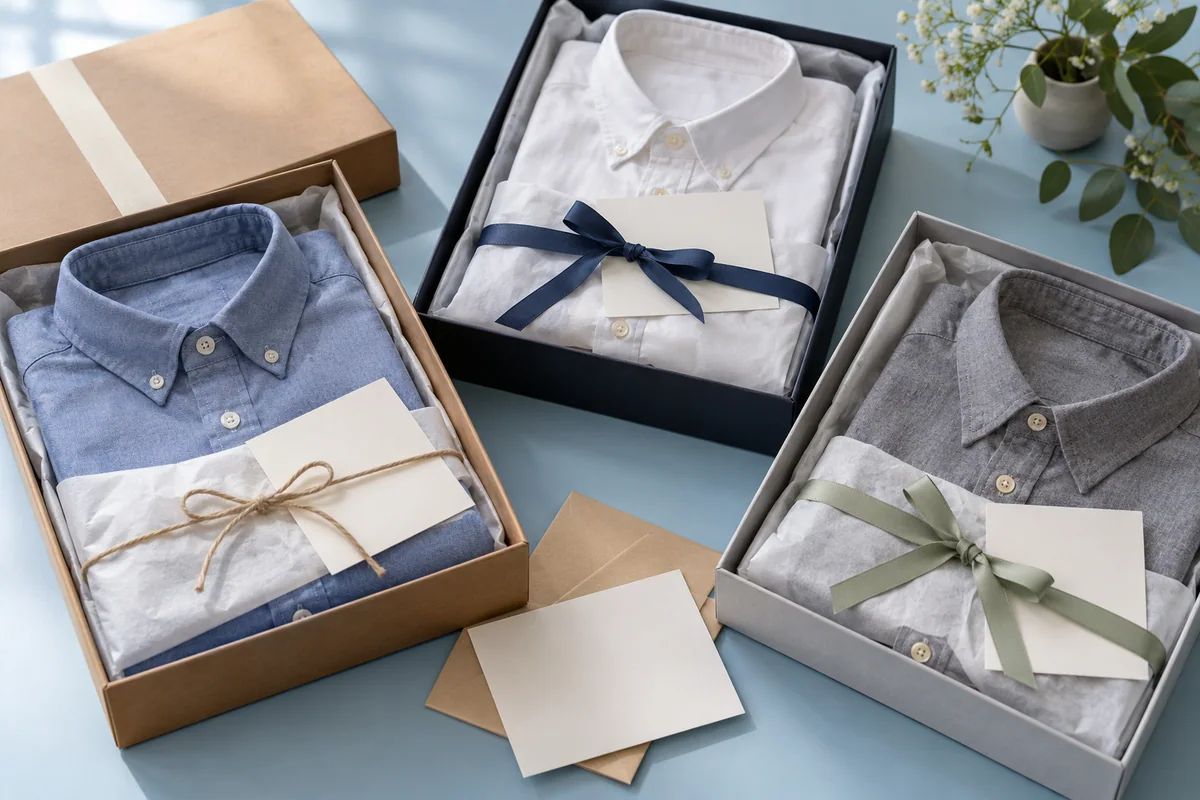
Pair shirt sizes with gift-set assignments before approving the packout arrangement. Twelve shirts do not necessarily fulfil twelve approved kit assignments: the size attached to each group still matters. Start from the buyer’s approved size schedule and the exact shirt model already accepted for use, then connect each size to the other gift variant and the pack’s identification.
The deliverable is a size-to-kit allocation map using synthetic group codes. It concerns the composition of the gifts being prepared. It does not recount a supplier delivery, assess garment fit or calculate whole-order assembly capacity.
Treat the approved size schedule as the assignment authority
Identify the schedule owner, issue and the shirt model to which its size labels refer. Keep the supplier’s actual size designation attached to that model. A label such as M is an assignment input; it does not authorise an assumption that another model’s M is interchangeable or that a particular recipient will find it suitable.
Use the approved schedule rather than inferring sizes from names, photographs, job titles or a previous event. If a group’s size is missing, record an unresolved assignment. The packer should not choose a spare size merely to produce a closed gift box.
Distinguish size from other kit choices. A notebook colour, box edition or approved accessory may vary independently. Record the full required combination. “Large shirt group” is insufficient when that group contains two approved notebook versions.
The custom T-shirt sourcing page gives broader product context. Here, the shirt and its decoration are approved inputs. New garment measurements, print grading and artwork changes belong to their own product decisions.
Give pack identification a clear purpose
Agree how a completed presentation pack will remain associated with its assigned combination. Use an existing approved code or a simple synthetic group reference in the planning record. This reference is an internal assignment cue, not an invented barcode standard or an automatic tracking feature.
Name the point at which the shirt’s size identity becomes concealed by the approved fold or surrounding packaging. Record how the size-to-pack association will be evidenced before that point and how the completed pack will refer back to it. Ask the provider to confirm the actual method; do not assume photographs or scanning are included.
Keep any required garment labels and protective packaging. Do not move a label, remove information or unfold a shirt beyond permitted handling merely to make an evidence view convenient. Where the available view cannot establish size identity, retain an unassigned status and request the appropriate evidence.
Use group codes in shared presentation examples where personal names are unnecessary. A public worksheet can demonstrate the mapping without exposing a recipient list. Any actual person-to-group schedule should remain in its authorised destination with only the information needed for the task.
Build the size-to-kit allocation map
Each row should describe one approved combination. Add the schedule reference above the table and retain the quantity for that row within the group’s description or a linked schedule. This original worksheet is an assignment record, not a stock ledger.
| Group code | Approved shirt size | Other kit variant | Pack identification | Unassigned decision |
|---|---|---|---|---|
| Synthetic group and required quantity | Exact model; approved size label | Notebook, box or other approved combination | Agreed pack cue linked to this row | Missing size assignment and its owner |
| Same group; another size row | Its specific size designation | Same or different authorised variant | Distinct reference where the combination changes | Do not substitute to balance a total |
| Assignment with unresolved input | Size unknown or conflicting | Known accompanying gifts retained in the record | No completed-assignment claim | Schedule owner supplies or resolves the input |
Check the association in both directions. From a schedule row, can the reviewer identify the intended pack combination? From a pack reference, can the reviewer find exactly one current assignment? An ambiguous code such as “event shirt” fails the second question even when the size is documented elsewhere.
The physical presentation needs the actual approved shirt state. If the mockup represents one size, record which sizes remain unrepresented and ask whether another view is needed. Do not compress the garment to match a photograph.
A fictional 12-kit assignment with equal shirt totals
Consider a wholly fictional group G-12. Its approved schedule requires five M shirts and seven L shirts of model S-4. The kit also has two approved notebook variants. All codes, quantities and records below are invented.
| Group code | Approved shirt size | Other kit variant | Pack identification | Unassigned decision |
|---|---|---|---|---|
| G-12-A: 2 kits | S-4, M | Navy notebook | G12-A | None in the approved schedule |
| G-12-B: 3 kits | S-4, M | Cream notebook | G12-B | None in the approved schedule |
| G-12-C: 4 kits | S-4, L | Navy notebook | G12-C | None in the approved schedule |
| G-12-D: 3 kits | S-4, L | Cream notebook | G12-D | One assignment unresolved in candidate A |
Candidate A’s proposed packout assignment uses six M shirts and six L shirts. Its total is twelve, but the schedule requires 2 + 3 = 5 M and 4 + 3 = 7 L. One M has no authorised assignment in this group, while one L assignment remains unresolved. These are composition facts in the fictional proposal, not receiving shortages or garment defects.
Suppose A assigns the extra M to the last G-12-D pack. Its cream notebook is correct, and its overall shirt count still agrees, but that specific combination is wrong against the schedule. The buyer returns that assignment for correction rather than accepting a balanced headline total.
Candidate B records five M and seven L in the four approved combinations. It matches the fictional allocation on paper. The next step is to link the actual identified shirts and packs to those rows through the agreed evidence. A correct proposal is not evidence that physical packout has already occurred.
Close the unresolved assignment with an authorised decision
For the open G-12-D position, name the schedule owner and the question: retain the approved L assignment, or authorise a specific changed assignment? The packer should not make the substitution. If the owner changes the schedule, retain the revised issue and identify the affected row rather than silently overwriting the original expectation.
Keep the assignment outcome distinct from garment fit and product acceptance. An L shirt paired correctly with its pack does not establish that its recipient selected an appropriate size. Likewise, a size decision does not approve a changed notebook or shirt design.
The gift-set kitting checklist supplies the wider assembly framework. Link the size map, evidence reference, unresolved assignment and next owner in the custom-gift progress record, using an agreed reporting method.
Through Get a quote, provide the approved size-to-kit combinations and ask how their association can be recorded through presentation packout. Confirm the actual service scope, handling permissions and evidence arrangement. Do not assume scanning, live allocation updates, fees or dates from the worksheet.
Frequently asked questions
Why are matching shirt and kit totals insufficient?
Totals omit the required size-to-kit association. In the fictional example, six M plus six L equals twelve shirts, but the approved group needs five M plus seven L. One assignment therefore remains unresolved. Check each approved combination, including any accompanying gift variant, before treating the group's composition as matched.
Can the packer use the nearest available shirt size?
Only an authorised owner can approve that specific change to the assignment. A physically available size does not become an acceptable substitute because it closes the last box. Keep the affected row unresolved while the owner decides. The packout record should not infer recipient fit or silently amend the size schedule.
What if the shirt size cannot be seen once the gift is folded?
Agree evidence of the actual size-to-pack association before it becomes concealed, and connect the completed pack's identifier to that record. Preserve required labels and permitted handling. If the available evidence cannot identify the size, mark the assignment unresolved. An exterior pack code alone should not be treated as proof of its concealed shirt.
What must be confirmed before approving size-dependent packout?
Confirm the shirt model, current approved size schedule, complete gift combinations, pack-identification method and treatment of unresolved rows. Identify which physical presentation states were represented and how the actual pairing will be evidenced. Keep the schedule owner's decisions traceable. This approval does not establish garment fit, product quality or completion of every physical pack.
Sources
Discuss a sourcing request related to this article.Pair Shirt Sizes with the Correct Gift-Set Variant