
Use a Removable Campaign Sleeve Without Replacing the Base Gift Box
Keep a fixed gift box and approved campaign sleeve aligned through first view, seam placement and removal, with separate decisions for two campaign interfaces.
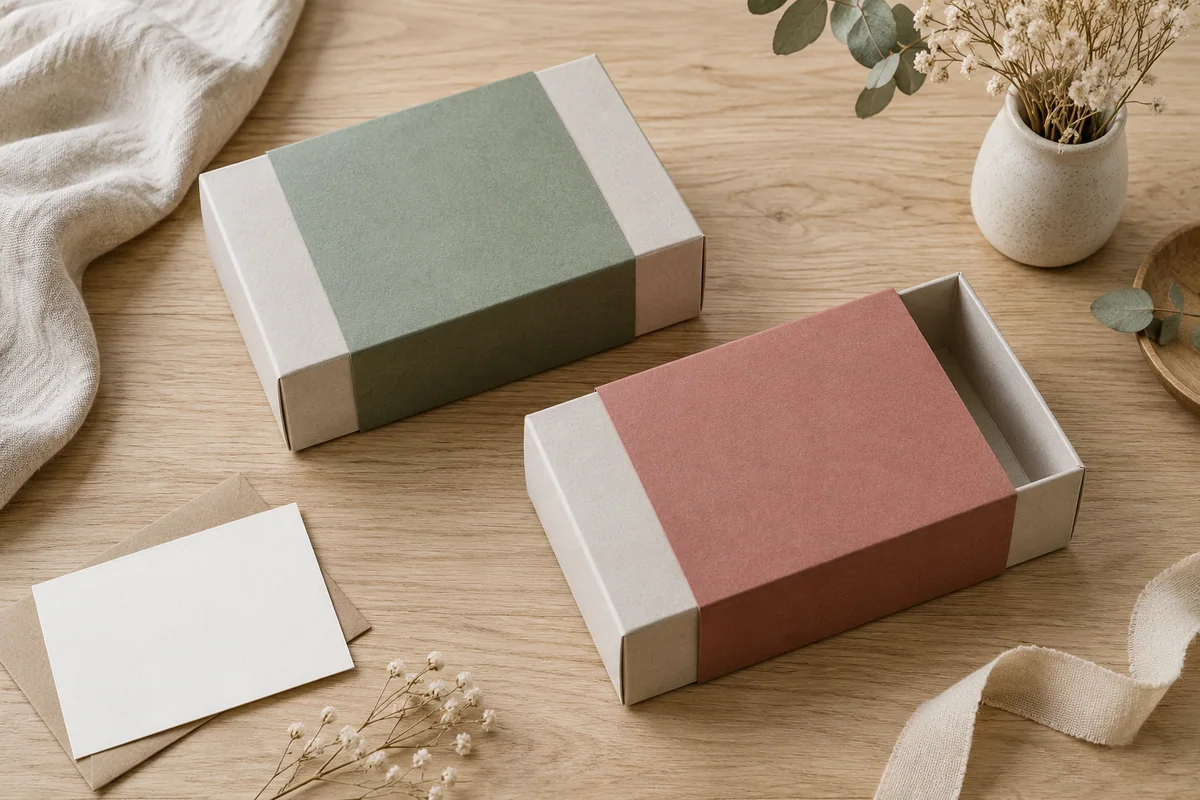
A removable campaign sleeve can carry an approved event identity while the underlying gift box keeps its agreed presentation. The buyer still needs to decide how those two components meet: which face points forward, where the sleeve seam sits, which direction the sleeve leaves, and what the recipient can reach afterward.
Treat a removable campaign sleeve for a gift box as a physical interface decision. Start with an approved base box and already approved campaign sleeves. The exercise is not a promise of lower cost, repeated reuse or environmental benefit. Its deliverable is an arrangement that preserves the intended opening with a clearly defined state before and after sleeve removal.
Define the base presentation that stays fixed
Identify the base box revision, its front and top, the opening tab or other approved access feature, and the position of any required information. Include the actual contents and insert arrangement represented in the review. A sleeve approved on an empty display box does not automatically describe the same interface around the intended packed box.
Mark which features the sleeve may cover temporarily and which must remain accessible or unobscured under the approved requirements. If that rule is missing, ask the responsible owner. Do not decide that a required label or seal is decorative because a campaign band would look better over it.
Name the campaign element separately. Its approved artwork and physical sleeve reference should be unambiguous, but this article does not reopen sponsor prominence or print-method selection. A new sleeve colour or campaign title is not permission to change the neutral box, move the opening tab or remove another layer.
Choose the removal sequence before the orientation
Decide whether the recipient must remove the sleeve before opening the box or whether the agreed design permits opening with the sleeve in place. Describe the intended ordinary action with a fixed viewing direction: slide toward the named short edge, then use the exposed front tab, for example. The sequence must follow the actual package instructions and permitted handling.
Show the sleeve seam and any overlap in the drawing. They are part of the physical arrangement, not invisible production details. A seam crossing the opening tab may conceal the intended access even when the campaign’s front face is upright. Record the conflict rather than telling the recipient to improvise another opening.
Do not invent a clearance or pull-force threshold. Use the actual approved components in an identified mockup and ask the responsible packaging owner what evidence is needed for their interface. If normal permitted removal is unclear or requires unapproved handling, stop that step and return the arrangement for review.
Build the base-box and sleeve register
These fictional proposals around one neutral box establish neither manufacturing instructions nor supplier capability.
| Base pack revision | Campaign sleeve | Slide direction | Covered feature | Removal state |
|---|---|---|---|---|
| B4 neutral box | Campaign A, sleeve SA2 | Toward named right edge | Front tab visible in proposal | Tab remains available after removal; actual mockup needed |
| B4 neutral box | Campaign B, sleeve SB1 | Toward named right edge | Seam crosses tab in first proposal | Ordinary sleeve removal not demonstrated; opening path unresolved |
| B4 neutral box | Campaign B, revised orientation proposal | Direction to be confirmed in mockup | Seam moved away from tab in drawing | New before-and-after views required |
Use a companion note for the fixed front view, box closure state, sleeve seam location, mockup reference, reviewer and unresolved question. Distinct sleeves need their own observed relationship to the box, even when they share an outside format.
Describe the removal state specifically. “Sleeve removed” might leave the correct front facing the recipient, reveal an unexpected plain side or expose a required opening feature. Record what the recipient encounters next. Do not equate a photograph of the separated pieces with evidence of the path used to separate them.
Compare two campaigns on one neutral box
Imagine two fictional campaigns using base box B4. Both require the recipient to see the campaign face, remove its sleeve and then open the box using the approved front tab.
Campaign A’s proposal shows the approved front face upright. Its seam sits on the named reverse face, with the tab visible before and after removal. This is a candidate for physical review; the illustration does not demonstrate removal.
Campaign B’s first proposal places the seam across the front tab and gives no removal direction. In the fictional mockup, no permitted sleeve-removal access is demonstrated from the intended first view, so the step before the front tab is used remains unproved. Correct campaign artwork does not settle this missing removal evidence. Keep SB1 pending and request a revised orientation or an explicitly changed opening sequence.
One proposal rotates SB1 so the seam clears the tab, but the campaign title then faces sideways. Moving the seam does not by itself establish the removal path, and this rotation also creates a title-orientation conflict. Compare both requirements together: front-face orientation and the intended opening path. Choose a revised physical sleeve proposal only after its artwork remains in the already approved treatment and the actual before-and-after views demonstrate the agreed relationship.
The useful outcome can therefore be “SA2 ready for interface mockup; SB1 orientation and removal path unresolved.” Do not alter B4 simply to make both campaign rows appear complete. If the buyer later authorises a changed base box, identify that as a different interface and review the affected rows again.
Review covered features and the revealed box together
With the actual approved mockup, record the fully applied state, the permitted removal path where observable, and the revealed base box. Keep the contents, closure and required information as supplied. There is no need to scratch, rub, tear or otherwise improvise a durability assessment for this presentation decision.
Note any observation that needs another owner, such as uncertain contact permission, hidden required information or a closure that cannot be reached in the agreed sequence. Do not solve it with an unapproved sticker, cut or removed seal. A visual review can document the issue without choosing a new material or production method.
Approve each sleeve-to-box relationship
The decision should name the base revision, campaign sleeve, front face, seam position, removal direction and resulting opening state. Record the evidence reference and any limits. Revisit sleeve-format changes even when the artwork message stays the same.
Use the custom gift printing guide for wider artwork and sample context and the gift-set checklist for assembly foundations. In a gift quote request, ask for confirmation of the exact sleeve-to-box proposal and reporting scope. Keep actual capability, commercial terms, transport protection and any environmental claims separate from this interface approval.
Frequently asked questions
Which campaign element can change while the base gift box stays fixed?
Only the approved campaign sleeve and its expressly approved interface may change within this brief. Identify the base box, contents arrangement and opening feature that remain the reference. If a proposed sleeve requires a different box, moved tab or removed layer, return that change to the owner. Do not treat it as an unnoticed consequence of changing campaign artwork.
What if the actual sleeve differs from the arrangement mockup?
Identify the changed sleeve reference, seam position, physical format or removal direction and revisit the affected interface using the approved components. A correct campaign image is insufficient if the physical sleeve now covers the opening feature differently. Keep the earlier decision limited to what its mockup represented and leave the changed relationship pending until reviewed.
Can the seam cover the opening tab if the sleeve is removable?
That depends on the expressly agreed opening sequence and other approved constraints. If sleeve removal is the intended first step, the proposal still needs a clear, permitted removal path and an appropriate next view. If the recipient is expected to use the tab while the sleeve remains applied, a seam blocking it conflicts with that brief. Resolve the sequence rather than assuming removability answers it.
Does retaining the same base box prove cost or environmental savings?
No. The register describes a presentation interface, not a cost model, material assessment or lifecycle result. Any savings or environmental claim needs separate evidence for its exact scope. Approve the base revision, sleeve identity, orientation, covered features and removal state on their own merits, with actual provider capabilities and commercial terms confirmed separately.
Sources
Discuss a sourcing request related to this article.Use a Removable Campaign Sleeve Without Replacing the Base Gift Box