
Repeat Power-Bank Gifts: Check the Bank, Cable and New Device Needs
Decide whether a repeat power-bank gift needs a different supported cable or a different bank by checking output, protocol and device requirements.
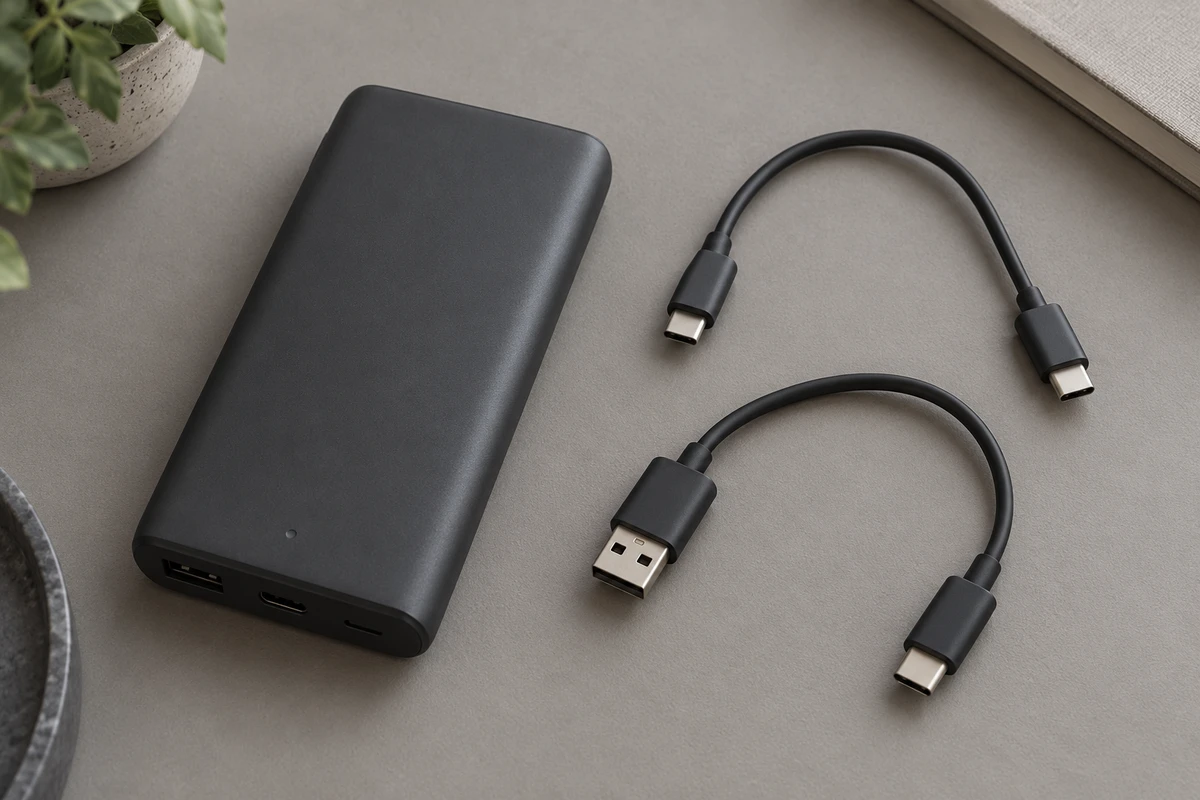
Before repeating a power-bank gift order, check whether the previous bank-and-cable combination still serves the new audience’s charging task. A change in device connector may call for a different supported cable rather than a different bank. A change in required power capability may call for a different bank even when the cable plugs look familiar.
Make the repeat decision at the level of the complete offered combination: bank model, output port, cable and intended device family. Reordering the same casing, capacity label or decorated product photograph does not establish the same useful charging result.
Start with the task and the changed device families
Describe the intended use in ordinary terms before comparing products. Is the gift meant to provide a phone top-up during an event, or has the new brief expanded to laptop charging? Those are different performance requirements. A connector change within a phone audience is also different from a higher-power task, even when both are described casually as “upgrading to USB-C.”
Use proportionate, authorised programme requirements such as supported device families and a defined charging purpose. Do not infer device ownership from someone’s job or collect private serial numbers merely to prepare a buying comparison. Where the intended device group is unknown, keep that uncertainty visible rather than claiming the gift serves everyone.
Distinguish repeating a new gift bundle from supporting previously issued banks. The example below concerns the next run of new gifts using the same bank model. It does not establish the condition or continued suitability of batteries already in use. No battery repair, opening of casings or modification is part of this purchasing decision.
Read the output port rather than only the charging input
Find the manufacturer’s specification for the exact bank revision being offered. Identify the port intended to supply power to the recipient’s device and its documented output capabilities. Separately identify how the bank itself is recharged. A connector used for input does not, by its appearance alone, establish a supported output function.
Ask the supplier to identify the relevant port in the product information, not merely send a picture of a row of sockets. If a port has more than one documented role, retain that description instead of assuming the roles are interchangeable in every combination. Where the programme expects more than one device to charge at once, request the model’s applicable combined-use specification rather than treating individual port headlines as a simultaneous promise.
Keep the bank reference, revision and output information together. A revised product with the same marketing name may need a fresh combination decision. If the actual offered version is unknown, the old order’s description is insufficient to support the new gift’s stated function.
Treat connector, protocol and cable as separate facts
The USB-IF’s March 2023 USB Type-C language guidelines distinguish the USB Type-C connector specification from USB Power Delivery. A USB-C connector label alone does not establish Power Delivery support. The USB-IF Power Delivery overview describes negotiated power delivery, so the relevant question is what the actual source, cable and receiving device support together.
For the offered gift, identify both cable ends and the manufacturer’s applicable cable specification alongside the bank’s documented output and the target device requirements. A cable that reaches the socket is not enough evidence for a promised charging performance. Conversely, a headline output rating on the bank does not remove the need to check the cable and device combination.
Do not derive a universal charging time, number of phone charges or electrical-safety conclusion from a wattage or mAh label. Those claims require their own applicable evidence. Keep marketing descriptions such as “fast charging” tied to the particular documented combination and conditions; omit them when that support is absent.
Decide whether the change is cable-only or bank-level
Compare three concrete options: repeating the old complete bundle, using the same bank with a supported different cable, and choosing another bank-and-cable combination. The second option is useful when the existing bank’s documented output meets the requirement and the change is genuinely resolved by the supported cable. It avoids replacing the bank model simply because the device-end connection has changed.
A new cable cannot add a missing source protocol or output capability to the bank. If the revised purpose requires capabilities the old model does not support, the bank-level option needs assessment. Do not assemble an adapter chain as an improvised answer to an unsupported gift combination.
Apple’s iPhone charging guidance provides a bounded example: it distinguishes a USB-C cable for iPhone 15 or later from a USB-C-to-Lightning cable for earlier supported models, alongside charging-source requirements. This illustrates why device generation and the complete connection matter. It neither endorses a promotional bank nor transfers Apple’s charging-time claims to one.
Keep accessories used to recharge the bank itself distinct from the cable supplied for the recipient’s device. If both are intended to be included, describe both explicitly in the bundle request. If the recipient must provide something separately, make that requirement visible before describing the gift as ready for its intended use.
Compare a repeat run without averaging compatibility
Consider a wholly hypothetical next gift run using bank model PB1. There are 24 recipients with requirement A and 36 with requirement B; both groups have the same modest phone top-up purpose. The fictional manufacturer’s combination evidence supports PB1 with cable CA for A and PB1 with cable CB for B. These are invented identifiers and conditional facts, not verified matches for real devices.
Under those assumptions, the comparison can retain 60 new PB1 banks and split the supplied cables into 24 CA and 36 CB. The sum is 24 + 36 = 60 complete bundles. This does not mean one recipient receives two cables, and it does not mean existing used banks have been checked. Each group receives the specifically supported combination.
If the second group instead needs a performance capability PB1 lacks, changing CA to CB does not resolve the gap. That group needs a separately supported option or a revised gift choice. A successful example for group A cannot establish group B’s compatibility, and majority coverage cannot justify promising the same function to every recipient.
Obtain comparable offers and keep other approvals separate
Ask for current offers that name the exact bank revision and cable variant in each complete bundle. Include the applicable packing, decoration and any changed accessories. Compare the price of delivering the intended useful combinations, rather than the unit price of an old bank against a different bundle with missing cable costs.
Request the product information supporting each claimed function through the agreed review route. Compatibility selection does not by itself establish safety, certification, battery condition or transport acceptance. Use the published power-bank gift shipping checklist for the separate shipping review instead of treating a charging comparison as release to dispatch.
A gift quote enquiry can summarise the intended charging task, non-personal device-family requirements and the candidate bundle references. Product links and supported image previews can help identify the options; arrange original documents separately with an authorised contact. Keep private device identifiers and recipient lists out of the public form. The repeat order should follow a documented useful combination for the new audience, with any unsupported group left outside the promised function until its needs are resolved.
Frequently asked questions
Does a new device connector mean replacing the whole power-bank gift?
Not automatically. The same bank with a supported different cable may meet the new requirement if its documented output capability is sufficient. A cable cannot add a missing source protocol or power capability; that gap needs a different supported option.
Does a USB-C port prove that a power bank supports Power Delivery?
No. USB-C identifies a connector specification and is not synonymous with USB Power Delivery. Confirm the role and capabilities of the actual output port, the cable specification and the intended device requirements for the offered combination.
Can one successful device example justify a repeat order for everyone?
No. Keep each relevant device-family requirement tied to its supported bank-and-cable combination. A successful example or majority-supported group does not establish coverage for another group, and unknown combinations should not inherit a performance promise.
Does a supported charging combination mean the gifts are ready to ship?
No. Product, safety and transport reviews remain separate. Identify the exact offered model and revision and obtain the relevant evidence through the agreed route. The charging comparison does not establish certification, battery condition or transport acceptance.
Sources
Discuss a sourcing request related to this article.Repeat Power-Bank Gifts: Check the Bank, Cable and New Device Needs