
Check Numbered Souvenir Edition Capacity Before Ordering More
Check a numbered gift edition’s stated cap, used identifiers and eligible leftovers before proposing another run. Work through a bounded 100-piece example.
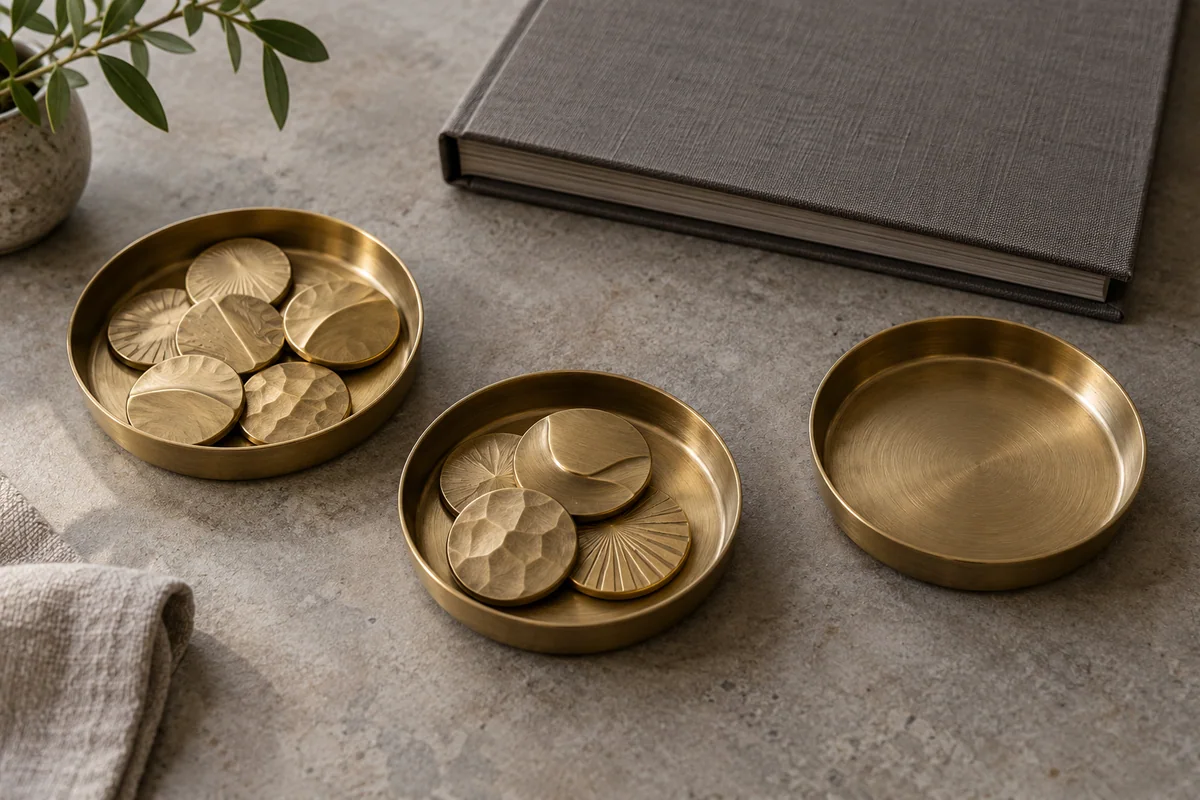
Before reordering a numbered commemorative gift, check what its declared edition limits and which identifiers have already been used. Eligible leftovers, unused numbers and remaining edition capacity are different things. A supplier’s ability to make more does not settle whether the programme can describe those new pieces as part of the existing finite series.
Start with an already-produced programme whose design rights and approved specification are available. This article addresses the next quantity proposal under that programme’s actual edition statement. It does not authenticate collectibles, predict resale value, inspect engraving or establish a universal rule for limited editions.
Find the exact boundary behind the edition statement
Retrieve the statement that defined the edition and identify its responsible owner. Does the cap concern objects made, objects issued, a particular presentation, or another expressly defined scope? Establish how the programme treats samples and replacements. Do not fill a silent rule with an assumption that favours a larger order.
Sequential numbering is a real merchandising option: Monterey Company’s custom-coin page describes it among its available features. That example establishes the physical mechanism only. It says nothing about 1688gifts’ capabilities or the terms of a buyer’s programme.
The scope distinction also has a concrete published example. The Royal Mint’s glossary distinguishes a limited edition presentation from maximum coin mintage. Those are that issuer’s terms, not definitions imposed on all souvenirs. The distinction illustrates why the scope of a finite edition needs to be read rather than assumed.
For an actual commemorative programme, copy the declared scope into the decision record and cite the controlling programme reference. Do not assume changing a box creates permission to make additional objects. Equally, do not assume a presentation limit necessarily describes the total quantity of every version. The actual statement must answer that question.
Keep edition history separate from the warehouse balance
A warehouse count describes objects present now. An edition history describes the acts and identities counted under the programme’s rule. If a numbered item has already been made, sending it to a recipient generally changes its physical location; whether any count changes depends on the declared rule. A missing object does not by itself establish an unused identifier.
Reconcile the record across previous runs before assigning numbers to another run. Identify used ranges, individually disputed numbers and the evidence supporting each status. An apparent gap in a spreadsheet is an unresolved gap until the actual history establishes it was never used. Do not restart numbering at 001 because the next order is a new purchase order.
Keep eligible unissued pieces separate from possible new manufacture slots. An existing numbered gift can potentially meet a recipient requirement without being newly made. Conversely, a number not yet used does not prove there is a physical gift ready to ship. The distinction matters even when the design, supplier and campaign message remain unchanged.
Work a fictional 100-piece programme
All programme rules, identifiers and quantities below are invented. Programme E expressly limits the number of non-currency brass souvenirs made to 100, including retained samples. Its attributable records establish that 001–080 have already been made: 60 distributed, 15 eligible unissued pieces and five retained samples. The programme now receives a request for 40 additional recipient gifts. Assume those 15 existing unissued pieces are eligible for this request; other execution and purchase approvals remain open.
| Decision element | Fictional quantity | Meaning under E’s stated rule |
|---|---|---|
| Maximum objects made | 100 | Retained samples count within the cap |
| Previously made | 80 | Includes the 60 distributed, 15 eligible unissued and five retained samples |
| Potential new manufacture slots | 20 | 100 minus 80; not proof of production availability |
| Existing eligible unissued gifts | 15 | Already included in the historical 80 |
| Candidate recipient quantity | 35 | 15 existing plus at most 20 new |
| Additional recipient request | 40 | Leaves five unresolved within this proposal |
A routine stock subtraction would suggest making 25 because 40 minus 15 is 25. E’s edition boundary supports only 20 potential new pieces: 100 minus 80. Existing eligible gifts plus that headroom provide at most 35 candidate gifts, leaving a shortfall of five. Do not add the 60 distributed pieces or five retained samples to the 80 again; both groups are already included.
This calculation is a limit on the proposal, not a purchase approval or promise of supply. It does not establish that all 20 pieces can be produced, delivered or accepted. The relevant commercial and execution decisions still need their own evidence.
Treat a lost number and a replacement as separate questions
Suppose the programme receives a report that gift 023 was lost after distribution. Under E’s fictional rule, that item was still made and its identity was already used. Removing it from a physical possession list does not reverse the historical act or silently free number 023.
Ask the programme owner for the actual replacement rule before proposing another item bearing that identifier. Is a replacement permitted, how would it be identified, and how does it count against the declared boundary? The article supplies no answer on the owner’s behalf. A return, damage report or cancellation likewise needs the actual rule and history; none automatically proves that a number has become unused.
Do not solve an edition conflict by quietly duplicating a number, relabelling a sample as never made or deleting an inconvenient record. Preserve the event and unresolved decision so the next buyer does not mistake a tidier register for new capacity.
Send purchasing a bounded proposal
For E, the supported starting proposal is to consider 15 eligible existing gifts and no more than 20 newly made gifts, with five recipients’ requirements still unresolved. Ask the programme owner to decide how to address that deficit. A different gift or a separately considered programme may be an option, but neither should be presented as an authorised continuation of E without the relevant decision.
The China souvenirs wholesale guide covers foundational format, tooling and rights questions. Those inputs remain necessary, but an available mould or continuing design permission does not expand an edition cap.
For a gift quote enquiry, describe the proposed new-unit quantity, the edition reference and the numbering scope that has actually been cleared. Ask for confirmation of the actual work and commercial terms. Keep unresolved number identities or edition changes outside the production instruction. A quote can answer whether a bounded run is offered; it cannot rewrite the programme’s earlier promise.
Frequently asked questions
Why does the fictional 40-gift request not support making 25 more?
Programme E allows 100 objects made, including samples, and already records 80 made. Only 20 potential new slots remain. Adding 15 eligible existing gifts gives at most 35 candidate recipient gifts, so five of the requested 40 remain unresolved. This is a proposal limit, not purchasing approval.
Does a lost numbered souvenir free its number for reuse?
Not under the fictional manufacture-count rule in the example: lost item 023 was already made and its identifier used. Ask the actual programme owner for the replacement and counting rules. A loss report, return or physical absence does not by itself establish unused edition capacity.
Is a presentation cap always the total limit for the object?
No universal interpretation is supplied here. The Royal Mint distinguishes its limited edition presentation from maximum coin mintage, illustrating why scope matters. Read the actual programme’s declared boundary instead of importing another issuer’s terms or assuming that new packaging permits additional manufacture.
Can an available supplier or mould resolve an edition shortfall?
They may be inputs to a production proposal, but they do not change the programme’s declared cap or identifier history. Send purchasing only the quantity and numbering scope that have been cleared, and keep any deficit or proposed edition change with the programme owner for a separate decision.
Sources
Discuss a sourcing request related to this article.Check Numbered Souvenir Edition Capacity Before Ordering More