
Record What a Closed Gift-Box Photo Cannot Show
Map each hidden layer to an agreed preclosure view and connect it with the final presentation of the same identified gift pack.
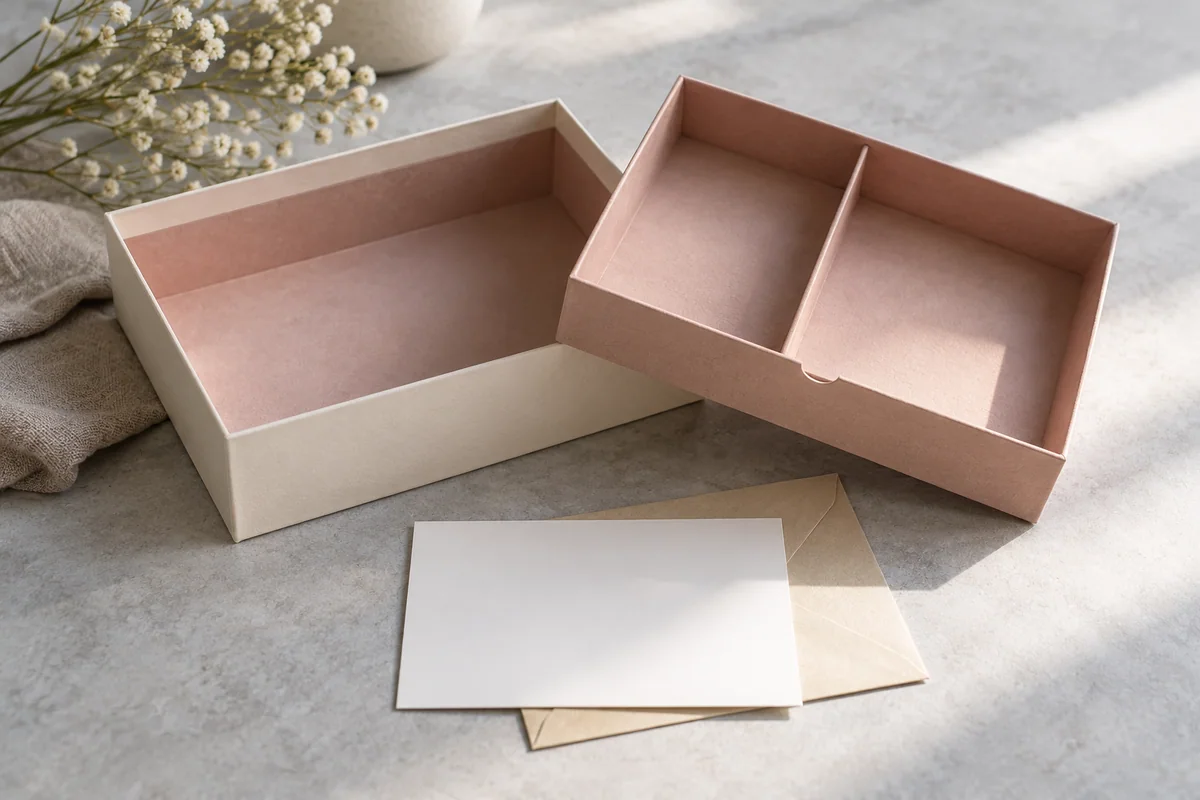
A closed gift-box photograph can show the lid and ribbon while leaving every internal layer unseen. Even a top-down open view may show a notebook and card but conceal an ornament below their tray. Decide which hidden placement questions need evidence before closure, then connect the views to the same identified pack.
Build a layer-to-evidence coverage storyboard. Each row names a hidden gift layer, the point when it is visible and the separate question answered by the final closed view. The purpose is to document a defined packout arrangement, not to turn an attractive photo collection into assurance about an entire production run.
Begin with the question each view must answer
Identify the approved box, insert arrangement, gift references and packout revision. Draw the layer order in words: base pocket with ornament, upper tray with notebook, card above notebook, then lid. These are locations in an approved arrangement, not a fresh decision about what belongs in the gift.
For every layer, ask what will become hidden by the next step. “Show lower ornament in its assigned pocket before upper tray placement” is answerable. “Show that everything is fine” is not. Include enough surrounding structure to locate the item within the pack rather than providing an isolated close-up.
Agree the legitimate pack stage at which the view can be made. Capturing an already accessible layer before it is covered differs from reopening a completed pack. Do not remove seals, required layers or contents just to recreate a missing image without the applicable authorization and handling instructions.
Keep one pack identity through the storyboard
Choose an ordinary reference that links the visible pack, layout revision and image record. An agreed reference card beside the box may be useful, but it must not cover the layer or become an unapproved gift component. Avoid guest names and other unnecessary personal information.
Ask the evidence provider how that reference is carried across the agreed views. A matching filename is a record supplied by the provider; it does not independently prove continuous custody. Retain the provider’s identification and any gaps instead of describing the images as uninterrupted tracking.
Do not merge the lower layer of pack P-31 with the upper layer of P-32 and label the result a complete record of P-31. The second view may still illustrate a layout feature, but its different pack identity limits what the combined set establishes.
Map gift box hidden layer packout evidence
The following storyboard uses fictional pack P-31 and layout H3. View IDs are planning references, not photographs already taken.
| Pack reference | Hidden layer | Required preclosure view | Final closed view | Unproved scope |
|---|---|---|---|---|
| P-31 / H3 | Ornament below upper tray | V1: base pocket and ornament visible together before covering | V4 shows exterior only; cannot close this row | Retention, unseen contact and other packs |
| P-31 / H3 | Upper tray seating relationship | V2: tray in intended position with relevant edges visible | V4 may hide all tray edges | Hidden underside and structural performance |
| P-31 / H3 | Notebook and card presentation | V3: complete upper-layer arrangement before lid closure | V4 establishes the final exterior presentation separately | Surfaces concealed beneath the notebook or card |
| P-31 / H3 | Final presentation state | No substitute for internal views | V4: closed box, approved closure and pack reference | Internal contents after the last visible stage |
Add the requested question, actual returned view and reviewer outcome beside each row in the working record. A requested V1 is not a completed V1. If the returned view crops out the ornament pocket, leave that row unresolved and say exactly what is missing.
Prefer one clear contextual view plus a linked detail when needed over several disconnected close-ups. A detail may expose the ornament while losing its location; the contextual view supplies the relationship. The storyboard is an editorial coverage method, not a prescribed photographic or inspection standard.
Compare a polished gallery with a linked layer sequence
In a wholly fictional submission A, the provider returns a closed photograph of P-31 and an upper-layer photograph showing its notebook and card. The buyer asks whether the ornament is in the base pocket. Neither view exposes that pocket, so the answer remains unresolved. Nothing in the gallery proves absence either.
Submission B adds an image showing an ornament below a tray, but its visible reference is P-32. This answers what that visible arrangement looks like on P-32. It does not fill P-31’s missing lower-layer row. Ask for the agreed P-31 evidence if available, or record that its preclosure view was not captured.
Submission C contains the agreed V1–V4 views, each linked by the provider to P-31 and H3. V1 shows the ornament in the assigned lower pocket; V3 shows the notebook and card above; V4 shows the closed presentation. The reviewer can record those visible observations and the supplied identity link, with the stated continuity limits.
The outcome is stronger coverage of the identified pack, not proof that every production unit contains an ornament. Nor does it prove that nothing changed between images. If the buyer needs a different level of assurance, agree that separate evidence scope with the responsible provider rather than expanding the meaning of these photographs.
Resolve missing stages without inventing a reconstruction
When preclosure evidence was missed, record the affected pack, hidden question and available references. Ask the decision owner what authorized next step can answer it. A later demonstration on another pack may explain the intended design, but it must retain that separate identity.
If an already closed pack is opened under an approved instruction, describe the new evidence as a later observation. Keep its date, pack reference and changed closure state. Do not label it an original preclosure view or imply it captures an earlier moment.
A revised layout also needs explicit treatment. If H4 relocates the ornament, H3’s base photograph cannot approve the new position. Update the target row and required evidence before closing the presentation decision. Existing images can remain useful background without inheriting a scope they never had.
Agree a reporting handover the provider can deliver
Specify the pack references covered, required stages, evidence owner, reviewer and unresolved questions. Agree how files and decisions will be shared. This does not assume an automated portal, continuous video or live production access.
The supplier-check guide provides broader due-diligence context, and the multi-supplier gift-set checklist covers general assembly. Through Get a quote, request the actual layer views and reporting scope needed for this gift. Confirm capability and commercial terms. Close the storyboard only to the extent supported by the identified views, leaving hidden features and unrepresented packs visible as limitations.
Frequently asked questions
Which hidden layers need views before the gift box is closed?
Choose views from the actual questions that closure will make unanswerable, such as an ornament’s placement below a tray. Name the layer, pack reference and moment when its location is visible. The final exterior photograph has a separate presentation purpose and cannot replace a missing lower-layer view merely because the box looks finished.
What if the actual pack uses a different tray from the evidence set?
Record the new tray and layout revision, then identify which previously visible relationships change. Request the affected layer views for that configuration. Do not combine the old lower-layer photo with the new closed exterior and describe them as a complete sequence for one arrangement without an explicit, supported applicability decision.
Can a later reopening replace a missing preclosure photograph?
Only as separately authorized later evidence, following the applicable handling instructions. Record the pack identity, date and changed closure state, and describe what is actually visible then. It does not recreate the earlier packing moment. A demonstration on another pack must also retain its own identity and cannot silently fill the original row.
Does one complete photo sequence prove that every gift was packed correctly?
No. State which identified pack and visible features the sequence represents, including how the provider linked the views and any continuity gaps. Other packs remain outside that evidence. If wider assurance is required, agree its separate scope and responsible provider rather than treating more photographs of one pack as broader coverage.
Sources
Discuss a sourcing request related to this article.Record What a Closed Gift-Box Photo Cannot Show